Want a Shipping Estimate? Add an Indian Pin Code, Click Here
This Product
Ships in 3-4 Weeks
Recommend
1
Share
4
Share
2
Share
5
Share
5
Send By e-mail
Verify Phone Number
Please enter the One Time Password (OTP) to verify phone number.
Write your own review
In just a few steps below you can become an online reviewer.
Please click on Continue to submit your review.
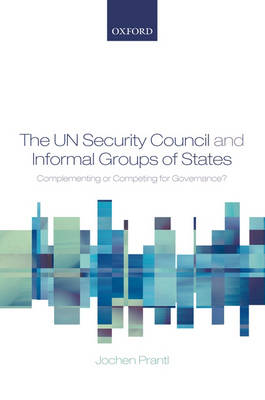
Title: The UN Security Council and Informal Groups of States: Complementing or Competing for Governance?
Reviewed By:
Write your review here:
NOTE:HTML is not translated!
Rating:
Share this product on email
The UN Security Council and Informal Groups of States: Complementing or Competing for Governance?
Product Details:
Format: Hardback
Publisher: Oxford University Press
Language: English
Dimensions: 24.00 X 3.00 X 17.00
Publisher Code: 9780199287680
Date Added: 2018-08-09
Search Category: International
Jurisdiction: International
Overview:
This book provides the first comparative treatment of the roles of informal ad hoc groupings of states within selected conflict settings and their effects on governance in and out of the UN Security Council.
Since the 1990s, informal institutions such as groups of friends, and contact or core groups have proliferated as instruments for the management of risk and conflict due to the increasing demands on the UN Security Council to adapt to the new post-cold war security environment. The perception of both the capacity and limits of the Security Council has had a catalytic effect on the creation of these ad hoc mechanisms. The substance of conflict resolution and the process of its
legitimation tend to become increasingly detached, with the former being delegated to informal groups or coalition of states, while the Security Council provides the latter. The successful merger of right process and substantive outcome may strengthen the legitimacy of the Council and make actions taken by informal
institutions more acceptable.
This book seeks to establish the importance of informal ad hoc groupings of states in the making of peace. The dynamics between informal institutions and the Security Council are closely examined in the context of conflict resolution in Namibia, El Salvador, and Kosovo. The study illustrates the changing role of the Council in the maintenance of international peace and security. The decentralization of tasks to informal groups allows the achievement of policy goals that would be
unattainable in the centralized setting of formal international organizations. In effect, informal institutions are agents of incremental change.
+ View More
Table Of Contents:
Introduction ; PART I: INFORMAL GROUPS OF STATES AND THE UN SECURITY COUNCIL: GRASPING THE DYNAMICS ; 1. Janus-Faced Structure of the Security Council: Open System and Closed Shop ; 2. Emergence of Informal Groups of States ; 3. Proliferation of Informal Groups in the Post-Bipolar Era ; 4. Conclusion: Exit, Voice, and Loyalty as Analytical Framework ; PART II: THE CASES OF NAMIBIA, EL SALVADOR, AND KOSOVO ; 5. Namibia: Group of Three and Western Contact Group ; 6. El Salvador: Group of Friends of the UN Security Council ; 7. Kosovo: Quint, G-8, and Troika ; Conclusions: Implications for Governance of the UN Security Council ; Annex: List of Interviews Conducted ; Bibliography