Want a Shipping Estimate? Add an Indian Pin Code, Click Here
This Product
Ships in 3-4 Weeks
Recommend
1
Share
4
Share
2
Share
5
Share
5
Send By e-mail
Verify Phone Number
Please enter the One Time Password (OTP) to verify phone number.
Write your own review
In just a few steps below you can become an online reviewer.
Please click on Continue to submit your review.
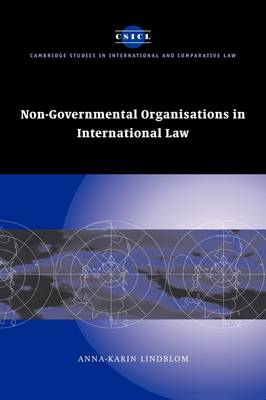
Title: Cambridge Studies in International and Comparative Law: Series Number 43: Non-Governmental Organisations in International Law
Reviewed By:
Write your review here:
NOTE:HTML is not translated!
Rating:
Share this product on email
Cambridge Studies in International and Comparative Law: Series Number 43: Non-Governmental Organisations in International Law
Product Details:
Format: Hardback
Publisher: Cambridge University Press
Language: English
Dimensions: 23.00 X 4.00 X 15.00
Publisher Code: 9780521850889
Date Added: 2018-08-09
Search Category: International
Jurisdiction: International
Overview:
Non-governmental organisations (NGOs) play an increasing political role on the international scene, and their position in relation to international law is generally regarded as important but informal. Their actual legal status has not been the subject of much investigation. This 2006 book examines the legal status of NGOs in different fields of international law, with emphasis on human rights law. By means of a thorough examination and systematisation of international legal rules and practices, the rights, obligations, locus standi and consultative status of NGOs are explored. This study is placed within a wider discussion on the representation of groups in the international legal system. Lindblom argues, on the basis of a discourse model of international decision-making, that non-governmental organisation is an important form of public participation that can strengthen the flawed legitimacy of the state-centric system of international law.
+ View More
Table Of Contents:
1. The main issues and their context; 2. Historical and conceptual background; 3. International legal theory and non-state actors; 4. Rights and obligations; 5. Standing before international judicial and quasi-judicial bodies; 6. Non-party participation before judicial and quasi-judicial bodies; 7. Co-operation with inter-governmental organisations; 8. NGO participation in international conferences; 9. Agreements with states and inter-governmental organisations; 10. Summary and concluding remarks.