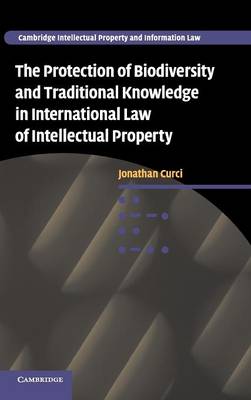
Cambridge Intellectual Property and Information Law: Series Number 12: The Protection of Biodiversity and Traditional Knowledge in International Law of Intellectual Property
Want a Shipping Estimate? Add an Indian Pin Code, Click Here
This Product
Ships in 3-4 Weeks
Recommend
1
Share
1
Share
1
Share
0
Share
1
Send By e-mail
Verify Phone Number
Please enter the One Time Password (OTP) to verify phone number.
Write your own review
In just a few steps below you can become an online reviewer.
Please click on Continue to submit your review.
Title: Cambridge Intellectual Property and Information Law: Series Number 12: The Protection of Biodiversity and Traditional Knowledge in International Law of Intellectual Property
Reviewed By:
Write your review here:
NOTE:HTML is not translated!
Rating:
Share this product on email
Cambridge Intellectual Property and Information Law: Series Number 12: The Protection of Biodiversity and Traditional Knowledge in International Law of Intellectual Property
Product Details:
Format: Hardback
Publisher: Cambridge University Press
Language: English
Dimensions: 23.00 X 2.00 X 16.00
Publisher Code: 9780521199445
Date Added: 2018-08-09
Search Category: International
Jurisdiction: International
Overview:
The relationships between international intellectual property treaties, the United Nations international environmental treaties (first and foremost the Convention on Biological Diversity), the relevant customary norms and soft law form a complex network of obligations that sometimes conflict with each other. The first set of treaties creates private rights while the latter affirms the sovereignty rights of States over genetic resources and related knowledge and creates international regimes of exploitation of the same. Jonathan Curci proposes solutions to the conflicts between treaties through the concept of 'mutual supportiveness', including the construction of a national-access and benefit-sharing regime, mandatory contractual provisions in relevant international contracts, a defensive protection when genetic resource-related traditional knowledge is unjustly patented through the analysis of the concepts of 'ordre public and morality', 'certificate of origin' in the patent application and 'novelty-destroying prior art' and positive protection through existing and sui generis intellectual property rights and misappropriation regimes.
+ View More
Table Of Contents:
Part I. The Main Problems: 1. Introduction to legal issues related to genetic resources and traditional knowledge in the international property system; Part II. The Protection of Genetic Resources in Intellectual Property Law: 2. The TRIPS agreement and the patent protection of genetic resources; 3. The relationship between the TRIPS agreement and treaties protecting genetic resources and traditional knowledge; Part III. The Protection of Traditional Knowledge in the International Patent System: 4. Towards clearer legal definitions; 5. The construction of an access and benefit sharing regime and intellectual property issues: criteria and options; 6. The defensive protection of traditional knowledge in international patent law; 7. Positive protection of traditional knowledge; 8. Final observations.