EBC Webstore
Eastern Book Company

|
|||
|
|||

 Home > LAW BOOKS > Criminal Law > Criminal Procedure Code |





 5
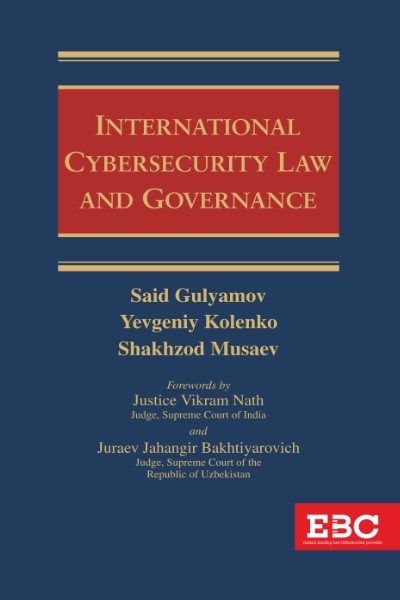

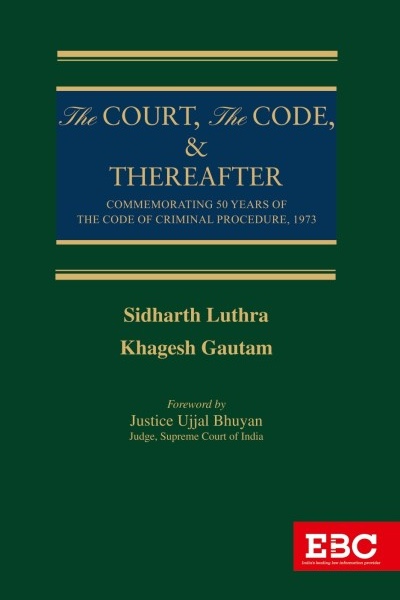
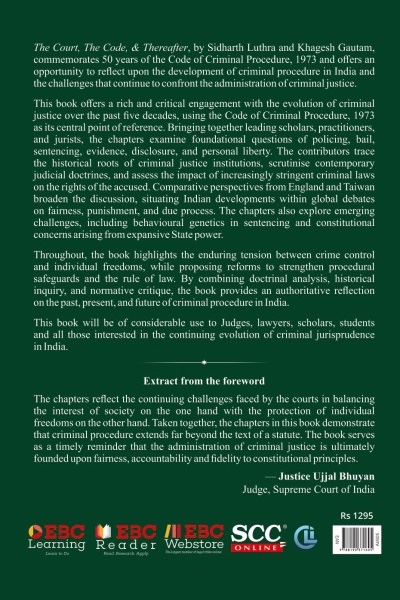
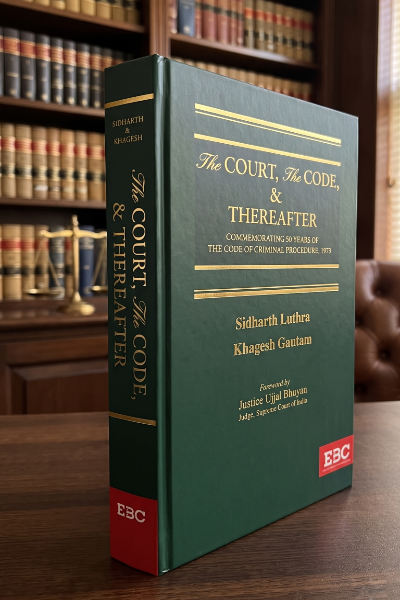
The Court, The Code, & Thereafter, by Sidharth Luthra and Khagesh Gautam, commemorates 50 years of the Code of Criminal Procedure, 1973 and offers an opportunity to reflect upon the development of criminal procedure in India and the challenges that continue to confront the administration of criminal justice.
This book offers a rich and critical engagement with the evolution of criminal justice over the past five decades, using the Code of Criminal Procedure, 1973 as its central point of reference. Bringing together leading scholars, practitioners, and jurists, the chapters exam-ine foundational questions of policing, bail, sentencing, evidence, disclosure, and personal liberty. The contributors trace the historical roots of criminal justice institutions, scrutinise contemporary judicial doctrines, and assess the impact of increasingly stringent criminal laws on the rights of the accused. Comparative perspectives from England and Taiwan broaden the discussion, situating Indian developments within global debates on fairness, punishment, and due process. The chapters also explore emerging challenges, including behavioural genetics in sentencing and constitutional concerns arising from expansive State power.
Throughout, the book highlights the enduring tension between crime control and individual freedoms, while proposing reforms to strengthen procedural safeguards and the rule of law. By combining doctrinal analysis, historical inquiry, and normative critique, the book provides an authoritative reflection on the past, present, and future of criminal procedure in India.
This book will be of considerable use to Judges, lawyers, scholars, students and all those interested in the continuing evolution of criminal jurisprudence in India.
Extract from the Foreword
The chapters reflect the continuing challenges faced by the courts in balancing the interest of society on the one hand with the protection of individual freedoms on the other hand. Taken together, the chapters in this book demonstrate that criminal procedure extends far beyond the text of a statute. The book serves as a timely reminder that the administration of criminal justice is ultimately founded upon fairness, accountability and fidelity to constitutional principles.
- Justice Ujjal Bhuyan Judge, Supreme Court of India
Brief Contents
Table of Cases
1. The Colonial Model of Policing: Playing the Same Game with Different Names - Rituraj Singh Chauhan
2. The Concept of “Statutory Bail” - Khagesh Gautam
3. The Supreme Court’s Doctrinal Position on “Police Officer”: A Critical Assessment - Khagesh Gautam and Ananya Walia
4. “Upholding the Majesty of Law”: Behavioural Genetics and Sentencing under Indian Criminal Justice Process - Khagesh Gautam and Shelja Gautam
5. Transcending Deterrence, Retribution and Tyranny of the Majority: Taiwan at the Crossroads of Human Rights and Capital Punishment - David KC Huang and Nigel N.T. Li
6. Bail under Special Criminal Provisions: The Rigours of Bail under UAPA and PMLA - Salman Khurshid and Zafar Khurshid
7. The Status of Disclosure Laws and Rights of an Accused in the Context of a Right to a Fair Trial - Nikunj Kulshreshtha
8. Prejudging Evidence in Special Bail Procedure - Sidharth Luthra and Sheezan Hashmi
9. Illegal Remand Orders: Legislative Lacuna or Judicial Apathy? - Eesha Mohapatra
10. Celebrating 50 Years of Progress? An English Perspective - Nicola Padfield
11. Section 27 of the Evidence Act, 1872 and Law’s Fitful Vigil Against Compelled Self-Incrimination - Nitya Ramakrishnan
Subject Index



|
Click on TITLE to choose available options.
|
|
Click on TITLE to choose available options.
|

|
Click on TITLE to choose available options.
|
|
Click on TITLE to choose available options.
|

|
Click on TITLE to choose available options.
|
|
Click on TITLE to choose available options.
|
|
|
|

|
Click on TITLE to choose available options.
|
|
Click on TITLE to choose available options.
|
|
||
|
||
|