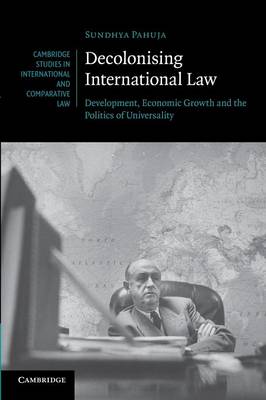
Cambridge Studies in International and Comparative Law: Series Number 86: Decolonising International Law: Development, Economic Growth and the Politics of Universality
Want a Shipping Estimate? Add an Indian Pin Code, Click Here
This Product
Ships in 3-4 Weeks
Recommend
1
Share
1
Share
1
Share
0
Share
1
Send By e-mail
Verify Phone Number
Please enter the One Time Password (OTP) to verify phone number.
Write your own review
In just a few steps below you can become an online reviewer.
Please click on Continue to submit your review.
Title: Cambridge Studies in International and Comparative Law: Series Number 86: Decolonising International Law: Development, Economic Growth and the Politics of Universality
Reviewed By:
Write your review here:
NOTE:HTML is not translated!
Rating:
Share this product on email
Cambridge Studies in International and Comparative Law: Series Number 86: Decolonising International Law: Development, Economic Growth and the Politics of Universality
Product Details:
Format: Paperback / softback
Publisher: Cambridge University Press
Language: English
Dimensions: 23.00 X 2.00 X 15.00
Publisher Code: 9781107657472
Date Added: 2018-08-05
Search Category: International
Jurisdiction: International
Overview:
The universal promise of contemporary international law has long inspired countries of the Global South to use it as an important field of contestation over global inequality. Taking three central examples, Sundhya Pahuja argues that this promise has been subsumed within a universal claim for a particular way of life by the idea of 'development'. As the horizon of the promised transformation and concomitant equality has receded ever further, international law has legitimised an ever-increasing sphere of intervention in the Third World. The post-war wave of decolonisation ended in the creation of the developmental nation-state, the claim to permanent sovereignty over natural resources in the 1950s and 1960s was transformed into the protection of foreign investors, and the promotion of the rule of international law in the early 1990s has brought about the rise of the rule of law as a development strategy in the present day.
+ View More
Table Of Contents:
1. Introduction; 2. Inaugurating a new rationality; 3. From decolonisation to developmental nation state; 4. From permanent sovereignty to investor protection; 5. From the rule of international law to the internationalisation of the rule of law; 6. Conclusion.