Want a Shipping Estimate? Add an Indian Pin Code, Click Here
This Product
Ships in 3-4 Weeks
Recommend
1
Share
1
Share
1
Share
0
Share
1
Send By e-mail
Verify Phone Number
Please enter the One Time Password (OTP) to verify phone number.
Write your own review
In just a few steps below you can become an online reviewer.
Please click on Continue to submit your review.
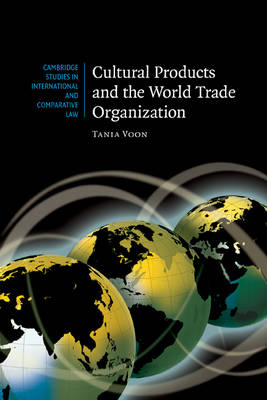
Title: Cambridge Studies in International and Comparative Law: Series Number 54: Cultural Products and the World Trade Organization
Reviewed By:
Write your review here:
NOTE:HTML is not translated!
Rating:
Share this product on email
Cambridge Studies in International and Comparative Law: Series Number 54: Cultural Products and the World Trade Organization
Product Details:
Format: Paperback / softback
Publisher: Cambridge University Press
Language: English
Dimensions: 23.00 X 2.00 X 15.00
Publisher Code: 9780521184052
Date Added: 2018-08-09
Search Category: International
Jurisdiction: International
Overview:
Debate about trade and culture has a long history, but the application of WTO rules to cultural products such as films, radio, and books remains one of the most divisive issues in the organization. After assessing the economic and social arguments for treating cultural products differently from things like steel or wheat, this 2007 book explains how the vastly different views of WTO members in earlier negotiations led to an outcome that is disappointing for all. It goes on to provide a comprehensive evaluation of possible solutions, including evolution of the law through WTO dispute settlement, an agreement outside the WTO, and reforms to improve the balance between trade liberalization and cultural policy objectives.
+ View More
Table Of Contents:
Part I. Stalemate and its Ideological Origins: 1. Trade and culture; 2. A case study of cultural products: protectionism vs cultural policy; 3. What's wrong with the current treatment of cultural products?; Part II. Options for the Future: 4. Resolution through dispute settlement and international law; 5. Constructing a new agreement outside the WTO; 6. Improving the existing WTO agreements; 7. Conclusion.