Want a Shipping Estimate? Add an Indian Pin Code, Click Here
This Product
Ships in 3-4 Weeks
Recommend
1
Share
4
Share
2
Share
5
Share
5
Send By e-mail
Verify Phone Number
Please enter the One Time Password (OTP) to verify phone number.
Write your own review
In just a few steps below you can become an online reviewer.
Please click on Continue to submit your review.
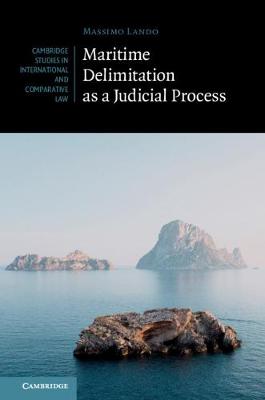
Title: Cambridge Studies in International and Comparative Law: Series Number 144: Maritime Delimitation as a Judicial Process
Reviewed By:
Write your review here:
NOTE:HTML is not translated!
Rating:
Share this product on email
Cambridge Studies in International and Comparative Law: Series Number 144: Maritime Delimitation as a Judicial Process
Product Details:
Format: Hardback
Publisher: Cambridge University Press
Language: English
Dimensions: 23.00 X 3.00 X 16.00
Publisher Code: 9781108497398
Date Added: 2018-08-11
Search Category: International
Jurisdiction: International
Overview:
Maritime Delimitation as a Judicial Process is the first comprehensive analysis of judicial decisions, state practice and academic opinions on maritime boundary delimitation. For ease of reading and clarity, it follows this three-stage approach in its structure. Massimo Lando analyses the interaction between international tribunals and states in the development of the delimitation process, in order to explain rationally how a judicially-created approach to delimit maritime boundaries has been accepted by states. Pursuing a practical approach, this book identifies disputed points in maritime delimitation and proposes solutions which could be applied in future judicial disputes. In addition, the book engages with the underlying theories of maritime delimitation, including the relationship between delimitation and delineation, the effect of third states' rights on delimitation, and the manner in which each stage of the process influences the other stages.
+ View More
Table Of Contents:
Figures; Foreword; Preface; Table of cases; Table of treaties and legislation; Abbreviations; 1. Maritime delimitation in the time of international tribunals; 2. Historical and conceptual framework; 3. Relevant coast and relevant area; 4. Equidistance; 5. Relevant circumstances; 6. Disproportionality; 7. States, international tribunals and the delimitation process; Appendix 1; Appendix 2; Bibliography; Index.