EBC Webstore
Eastern Book Company

|
|||
|
|||
 Home > LAW BOOKS > Criminal Law > Evidence > 1st Edition, 2025 Home > LAW BOOKS > Criminal Law > Evidence > 1st Edition, 2025 |




 7
7
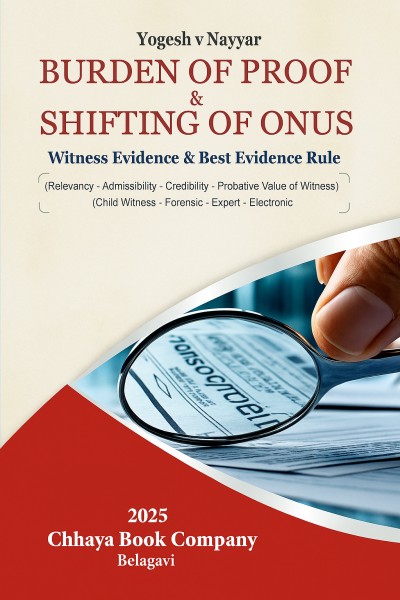
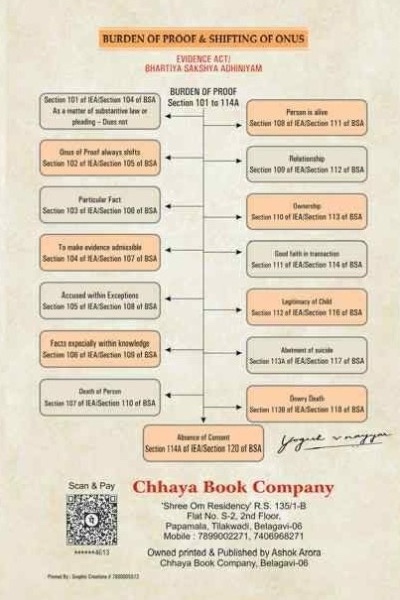
This comprehensive work by Yogesh V. Nayyar provides a detailed and analytical exposition on one of the most vital areas of the law of evidence - the burden of proof, shifting of onus, and the principles governing witness testimony and best evidence. The book examines these doctrines with reference to both the Indian Evidence Act, 1872 and the newly enacted Bharatiya Sakshya Adhiniyam, 2023, highlighting the evolution, interpretation, and comparative nuances between the two statutes.
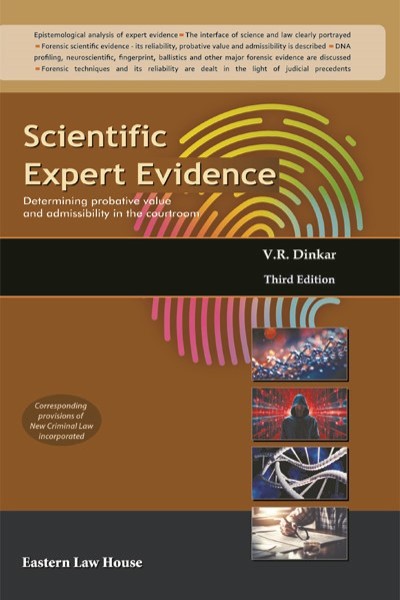
It delves into the concepts of relevancy, admissibility, and credibility of evidence, as well as the probative value of witness statements. The treatment of child witnesses, forensic and expert evidence, and electronic evidence is discussed with clarity, supported by judicial precedents and practical illustrations.
Key Features:
This book is an indispensable reference for law students, advocates, judicial officers, academicians, and legal researchers seeking a clear and authoritative understanding of evidentiary principles relating to the burden of proof, witness testimony, and the best evidence rule under both traditional and modern frameworks of Indian law.




|

Click on TITLE to choose available options.
|
|
Click on TITLE to choose available options.
|

|
Click on TITLE to choose available options.
|

|
Click on TITLE to choose available options.
|

|
Click on TITLE to choose available options.
|
|
Click on TITLE to choose available options.
|

|
|

|
Click on TITLE to choose available options.
|
|
Click on TITLE to choose available options.
|
|
|
|
||
|
||
|