Want a Shipping Estimate? Add an Indian Pin Code, Click Here
This Product
Ships in 3-4 Weeks
Recommend
1
Share
1
Share
1
Share
0
Share
1
Send By e-mail
Verify Phone Number
Please enter the One Time Password (OTP) to verify phone number.
Write your own review
In just a few steps below you can become an online reviewer.
Please click on Continue to submit your review.
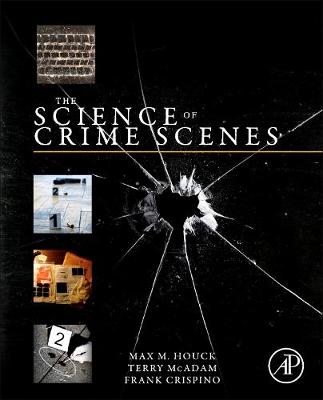
Title: The Science of Crime Scenes
Reviewed By:
Write your review here:
NOTE:HTML is not translated!
Rating:
Share this product on email
The Science of Crime Scenes
Product Details:
Format: Hardback
Publisher: Elsevier Science Publishing Co Inc
Language: English
Dimensions: 0.00 X 0.79 X 0.00
Publisher Code: 9780123864642
Date Added: 2018-08-06
Search Category: International
Jurisdiction: International
Overview:
The Science of Crime Scenes addresses the science of crime scene investigation and processing, including the latest methods and technologies. This book covers the philosophy of crime scenes as historical events, the personnel involved at a scene (including the media), the detection of criminal traces and their reconstruction, and special crime scenes, such as mass disasters and terrorist events. Written by an international trio of authors with decades of crime scene experience, it is the next generation of crime scene textbooks.
The book provides in-depth coverage of disasters and mass murder, terror crime scenes, and CBRN (chemical, biological, radioactive and nuclear) - topics not covered in any other text. It includes an instructor website with lecture slides, test bank, outlines, definitions, and activities, along with a student companion site with an image collection.
This text will be of interest to advanced undergraduate and graduate students in forensic science programs, as well as to forensic practitioners and crime scene technicians.
+ View More
Table Of Contents:
SECTION 1: THE SCIENCE OF CRIME SCENE INVESTIGATION 1.0 The "forensic mindset" 1.1 From scene to laboratory to court 2.0 What is a crime scene? 2.1 Crime scene intelligence: Connecting people, places, and things
SECTION 2: PERSONNEL AND PROCEDURES 3.0 Personnel 3.1 First responder on the scene 3.2 The investigator in charge 3.3 The forensic team: Officers, scientists and specialists 3.4 Non-forensic personnel: Superiors, officials, and the media 4.0 General crime scene procedure 4.1 "Freezing" the scene and the 3R's (Recognize, Record and Recover) 4.2 The chain of custody 4.3 Recording the scene: Sketching, photography, and video
SECTION 3: DETECTION AND RECONSTRUCTION 5.0 Searching for evidence: Recovery 5.1 Detecting 5.2 Collection 5.3 Preserving 5.4 Submitting evidence to the laboratory 6.0 Evidence types and enhancement 6.1 Chemical evidence 6.2 Biological evidence 6.3 Impression evidence 6.4 Other evidence types 7.0 Crime scene reconstruction 7.1 An archaeological approach 7.2 Bloodstain pattern analysis 7.3 Photogrammetry and 3D reconstruction
SECTION 4: SPECIAL CRIME SCENES 8.0 Special crime scenes 8.1 Disaster and mass fatalities 8.2 Terrorist crime scenes 8.3 CBRN crime scenes 8.4 Underwater and underground crime scenes