Want a Shipping Estimate? Add an Indian Pin Code, Click Here
This Product is
Sold Out
Recommend
1
Share
4
Share
2
Share
5
Share
5
Send By e-mail
Verify Phone Number
Please enter the One Time Password (OTP) to verify phone number.
Write your own review
In just a few steps below you can become an online reviewer.
Please click on Continue to submit your review.
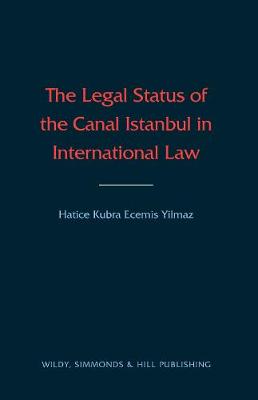
Title: The Legal Status of the Canal Istanbul in International Law
Reviewed By:
Write your review here:
NOTE:HTML is not translated!
Rating:
Share this product on email
The Legal Status of the Canal Istanbul in International Law
Product Details:
Format: Hardback
Publisher: Wildy, Simmonds and Hill Publishing
Language: English
Dimensions: 23.00 X 0.79 X 15.00
Publisher Code: 9780854902569
Date Added: 2018-08-10
Search Category: International
Jurisdiction: International
Overview:
Canals are fascinating, whether domestic or international. Gouged into the firmament at great expense of capital and human labour, international canals transform the transit route of the oceans, linking that which nature did not. The Suez, Panama, and Kiel canals are likewise exercises in human imagination that confounded the sceptics of the day about what might be accomplished and what was deemed to be impossible.
Although each international canal is unique in so many ways, common principles at a certain level of generality have emerged in fashioning their respective legal regimes. The challenge is whether the major three international canals will be joined by a fourth. The Black Sea and the Mediterranean Sea are actually joined by nature in the personage of the Turkish Straits, recognized for centuries to be a key "chokepoint" in the arteries of maritime commerce. So heavy has maritime traffic become in the Straits than an alternative, or parallel, artificial route has been considered desirable since at least the sixteenth century. Half a millennium later plans are advanced to undertake and complete the construction of what is today known as the "Istanbul Canal".
Dr. Ecemis-Yilmaz has produced what is believed to be the first analysis in any language of the potential implications of the Istanbul Canal for the convention regime of the Turkish Straits. She considers the history of the Straits regime, relevant aspects of the Suez and Panama canal regimes, and the sundry scenarios that may arise out of a reconsideration of the Montreux Convention provisions. Her book is intended to encourage discussion of the alternatives, and for the non-Turkish specialist will be all the more attractive and informative for its extensive use of Turkish doctrinal writings and Turkish State practice.
+ View More
Table Of Contents:
List of Maps
List of Tables
Abbreviations
Acknowledgements
Foreword
William E Butler
PART I: GENERAL QUESTIONS OF INTERNATIONAL LEGAL REGIME OF CANALS AND STRAITS
CHAPTER 1: INTRODUCTION
Geophysical Features
CHAPTER 2: INTERNATIONAL CANALS
Significance of the International Regime of Canals
Full Assent is Given
Assent in Treaty of Peace
No Assent is Given
The Legal Nature of Canals
Legal Consequences
CHAPTER 3: INTERNATIONAL STRAITS
Significance of Straits Under an International Regime
Innocent Passage
Transit Passage
The Legal Nature of Straits
Legal Consequences
CHAPTER 4: CANALS AND STRAITS IN THE WORLD AND THEIR SAFETY MEASURES
Canals
Suez Canal
Panama Canal
Kiel Canal
Straits
Canakkale (Dardanelles) Strait
Strait of Malacca
Strait of Hormuz
Strait of Magellan
Danish Straits
Strait of Gibraltar
PART II: HISTORICAL BACKGROUND OF THE MARMARA-BLACK SEA CANAL PROJECT AND TURKISH STRAITS
CHAPTER 5: HISTORY OF THE MARMARA-BLACK SEA CANAL PROJECT
Ottoman Empire Period
Period of the Republic of Turkey
Concept of the Canal Istanbul Project
CHAPTER 6: HISTORY OF THE LEGAL REGIME OF TURKISH STRAITS
Legal Regime of Turkish Straits Before the Ottoman Empire
Ancient Greece and the Trojan Era
Macedonia Era
Rome and Byzantine Era
Historical Background of Legal Regime of Turkish Straits After the Ottoman Empire
Absolute Turkish Sovereignty in the Straits
Regulation under Bilateral Conventions
Regulation under Multilateral Conventions
The Straits in the Lausanne Treaty
Period of National Struggle
Lausanne Convention Relating to the Regime of Straits
CHAPTER 7: THE STRAITS IN THE MONTREUX CONVENTION
Collapse of the Security System
Diplomatic Note From Turkey to Contracting Countries
Reasons for Positive Reaction to Turkish Diplomatic Note
Intentions of the Parties in the Montreux Convention
Intentions of Turkey
Intentions of the Soviet Union
Intentions of France
Intentions of England
Intentions of Other States
Montreux Convention and Passage Regime
Merchant Vessels
Warships
Aircraft
Application of the Montreux Convention
Dissolution of the Union of Soviet Socialist Republics (USSR) and Yugoslavia
Passage Requirements
Terminology of Subrogation
Replacement of States that Separated from Yugoslavia
Replacement of States that Withdrew from Union of Soviet Socialist Republics
Ukraine and Georgia
Replacement of States that Separated from Great Britain
Japan Leaving the League
Present High Contracting Parties
Subrogation and the Montreux Convention
Rights of NATO Standing Naval Force Atlantic and Standing Naval Force Mediterranean to Passage through the Straits for Any Reason
Pros and Cons of the Montreux Convention for Turkey
Armament of Straits District and Legal Status of North Aegean Islands
Termination of the International Straits Commission
CHAPTER 8: INTERNATIONAL MARITIME ORGANIZATION AND THE TURKISH STRAITS
Legal Developments within IMO Compliance Process
1994 Traffic Separation Schemes
Enforcement of Regulation and IMO Procedures
Discussions at National and International Levels
1998 Regulations of Turkish Straits and Correlation with International Law
Turkish Straits Maritime Traffic Order Regulations
Interim Stoppage of Traffic at Turkish Straits
Ship Routing (Traffic Discrimination Order)
Turkish Straits Reporting System
Other Safety Rules
Passage of Nuclear-Powered Ships and Ships Carrying Hazardous Waste
Weaknesses of 1998 Regulation
Impact of Discussions at the IMO on 1998 Regulation
PART III: INTERNATIONAL LEGAL ISSUES OF THE PROTECTION AND PRESERVATION OF TURKISH STRAITS AND THE IMPACT OF THE CANAL ON SUCH PROBLEMS
CHAPTER 9: PREVENTION OF POLLUTION OF TURKISH STRAITS
Contamination of the Sea by the Sea
Pollution Caused by Ships
Effects of Oil Pollution on the Sea
Measures Taken Against Marine Pollution Caused by Ship Pollution in Turkish Straits
CHAPTER 10: INTERNATIONAL LEGAL REGULATION OF PROTECTION, PRESERVATION, AND PREVENTION OF POLLUTION OF TURKISH STRAITS
Important International Conventions Relevant to Pollution in Turkish Straits
International Convention for the Prevention of Pollution from Ships (MARPOL)
Convention on the International Regulations for Preventing Collisions at Sea, 1972 (COLREG)
1954 International Convention for the Prevention of Pollution of the Sea by Oil (OILPOL)
Basel Convention on the Control of Transboundary Movements of Hazardous Wastes and Their Disposal (Basel Convention)
Bern Convention on the Conservation of European Wildlife and Natural Habitats (Bern Convention)
Ramsar Convention on Wetlands of International Importance (Ramsar Convention)
1957 Brussels International Convention
Bucharest Convention on Protection of the Black Sea against Pollution
Barcelona Convention for Protection of the Mediterranean Sea against Pollution (1976)
CHAPTER 11: IMPACT OF THE CANAL ON LEGAL PROBLEM OF PROTECTING AND PRESERVING THE TURKISH STRAITS
Authority of Coastal States with regard to Environmental Protection
Measures Taken to Prevent Marine Pollution Arising from Ships in Turkish Straits
Impact of the Canal Istanbul on the Legal Problem of Protecting and Preserving the Turkish Straits
PART IV: INTERNATIONAL LEGAL REGULATIONS ENSURING SAFE NAVIGATION IN TURKISH STRAITS AND THE EFFECTS OF THE CANAL ON SUCH REGULATIONS
CHAPTER 12: INTERNATIONAL LEGAL REGULATIONS ENSURING SAFE NAVIGATION IN TURKISH STRAITS AND THE CANAL
Impact of the Bosporus on Vessel Accidents
Navigational Systems to Provide Passage through the Straits
Information Services
Navigational Aids
Ship Traffic Circulation Services
Pilotage
Charges Payable by Ships Passing through the Turkish Straits and International Cooperation
Cooperation in International Straits
PART V: INTERNATIONAL CONVENTIONS AND PRINCIPLES, AND MANAGEMENT OF THE CANAL ISTANBUL
CHAPTER 13: PROBABLE INTERNATIONAL LEGAL PROBLEMS WITH THE CANAL ISTANBUL
Geopolitical Importance of Turkish Straits
Importance of Turkish Straits for Greece
Importance of Turkish Straits for Bulgaria
Importance of Turkish Straits for Romania
Importance of Turkish Straits for Ukraine
Importance of Turkish Straits for Russia
Importance of Turkish Straits for Georgia
Importance of Turkish Straits for Caucasia and Central Asian Turkic Countries
Importance of Turkish Straits for the European Union (EU)
Importance of Turkish Straits for United States
Importance of Turkish Straits for Other Countries
Reactions Against the Canal Istanbul by States that Border the Black Sea
CHAPTER 14: THE PRINCIPLES OF PACTA SUNT SERVANDA, REBUS SIC STANTIBUS, AND MARE LIBERUM AND MANAGEMENT OF THE CANAL
Pacta Sunt Servanda
Clausula Rebus Sic Stantibus
Mare Liberum
Pacta Sunt Servanda, Rebus Sic Stantibus, Mare Liberum, and the Canal Istanbul
CHAPTER 15: AN ALTERNATIVE TO THE "TRANSIT RULES" OF THE NEW CANAL
Importance of Emerging Technology in Law of the Sea and a Comparison of Classes of Ship as Determined by the Montreux Convention with Ships of Today
Possible Passage Regime in Event of Termination of the Montreux Convention
New International Agreement and Legal Aspects of the Canal Istanbul
Passage Regime
Encouraging Tankers to Pass through the Canal
Fees, Taxes, and Charges
Navigational Safety in Canal Istanbul
Pilotage Service in the Canal Istanbul
Rules for Preventing Environmental Pollution
CONCLUSION
BIBLIOGRAPHY
Books and Articles
Conventions, Agreements, and Treaties
Law and Regulations
Cases
Websites
INDEX OF NAMES