Want a Shipping Estimate? Add an Indian Pin Code, Click Here
This Product
Ships in 3-4 Weeks
Recommend
1
Share
4
Share
2
Share
5
Share
5
Send By e-mail
Verify Phone Number
Please enter the One Time Password (OTP) to verify phone number.
Write your own review
In just a few steps below you can become an online reviewer.
Please click on Continue to submit your review.
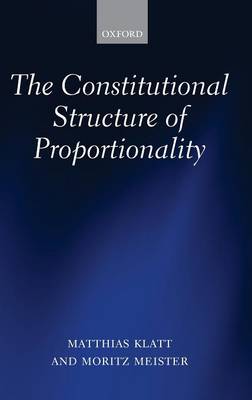
Title: The Constitutional Structure of Proportionality
Reviewed By:
Write your review here:
NOTE:HTML is not translated!
Rating:
Share this product on email
The Constitutional Structure of Proportionality
Product Details:
Format: Hardback
Publisher: Oxford University Press
Language: English
Dimensions: 24.00 X 2.00 X 17.00
Publisher Code: 9780199662463
Date Added: 2018-08-10
Search Category: International
Jurisdiction: International
Overview:
As constitutional law globalizes, the quest for a common grammar or 'generic constitutional law' becomes more pressing. Proportionality is one of the most prominent and controversial components of the modern, global constitutional discourse. In view of the alarming tension between the triumphant success of proportionality and the severity of the criticism directed towards it, this book offers an in-depth analysis of the critics of proportionality and demonstrates
that their objections against the proportionality test are not convincing. It clarifies and further develops the current theories of proportionality and balancing.
Building upon on Robert Alexy's predominant principles theory, the book suggests several modifications to this theory. Drawing examples from the case law of the European Court of Human Rights, the European Court of Justice, and various national constitutional courts it illustrates the argument in favour of proportionality and demonstrates its relevance for deciding concrete cases.
+ View More
Table Of Contents:
Introduction ; 1. The Structure of the Proportionality Test ; 2. Rights, Interests, and Trumps ; 3. The Method of Balancing ; 4. Discretion and Deference ; 5. Positive Rights and Proportionality Analysis ; 6. Epistemic Reliabilities in Proportionality Analysis ; 7. Case Analysis: Otto-Preminger-Institut v Austria ; 8. Results