Want a Shipping Estimate? Add an Indian Pin Code, Click Here
This Product
Ships in 3-4 Weeks
Recommend
1
Share
1
Share
1
Share
0
Share
1
Send By e-mail
Verify Phone Number
Please enter the One Time Password (OTP) to verify phone number.
Write your own review
In just a few steps below you can become an online reviewer.
Please click on Continue to submit your review.
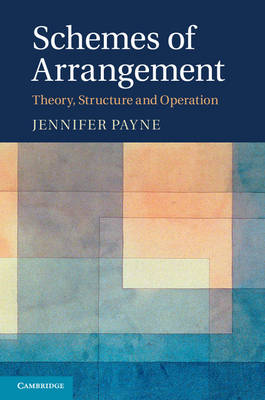
Title: Schemes of Arrangement: Theory, Structure and Operation
Reviewed By:
Write your review here:
NOTE:HTML is not translated!
Rating:
Share this product on email
Schemes of Arrangement: Theory, Structure and Operation
Product Details:
Format: Hardback
Publisher: Cambridge University Press
Language: English
Dimensions: 23.00 X 3.00 X 16.00
Publisher Code: 9781107016408
Date Added: 2018-08-10
Search Category: International
Jurisdiction: International
Overview:
Schemes of arrangement are an important and flexible mechanism, which can be used to reorganise a company's capital. They have undergone something of a renaissance since the global financial crisis, particularly as a debt restructuring device, since effective tools were needed to deal with financial distress. Schemes have also become the mechanism of choice for recommended takeovers. In order to understand their current popularity, this book examines the use of both member and creditor schemes, and compares their advantages and disadvantages to the alternatives that are available. It performs a critical, contextual and comparative analysis of schemes and their uses, and puts forward reform proposals that are designed to ensure that schemes continue to develop as an indispensable tool for companies for the future.
+ View More
Table Of Contents:
1. Schemes of arrangement - an introduction; 2. The mechanics of a scheme of arrangement; 3. Member schemes of arrangement: takeover schemes; 4. Member schemes of arrangement: other examples; 5. Creditor schemes of arrangement: debt restructuring; 6. Creditor schemes of arrangement: other examples; 7. Cross-border issues; 8. The geographical expansion of schemes of arrangement; 9. Conclusion.