Want a Shipping Estimate? Add an Indian Pin Code, Click Here
This Product
Ships in 3-4 Weeks
Recommend
1
Share
4
Share
2
Share
5
Share
5
Send By e-mail
Verify Phone Number
Please enter the One Time Password (OTP) to verify phone number.
Write your own review
In just a few steps below you can become an online reviewer.
Please click on Continue to submit your review.
Title: Patent Inventions - Intellectual Property and the Victorian Novel
Reviewed By:
Write your review here:
NOTE:HTML is not translated!
Rating:
Share this product on email
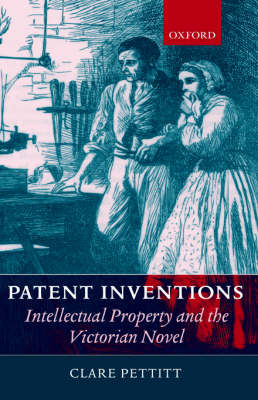
Patent Inventions - Intellectual Property and the Victorian Novel
Product Details:
Format: Hardback
Publisher: Oxford University Press
Language: English
Dimensions: 22.00 X 3.00 X 15.00
Publisher Code: 9780199253203
Date Added: 2018-08-08
Search Category: International
Jurisdiction: International
Overview:
Although much has been written about the history of copyright and authorship in the eighteenth and nineteenth centuries, very little attention has been given to the impact of the development of other kinds of intellectual property on the ways in which writers viewed their work in this period. This book is the first to suggest that the fierce debates over patent law and the discussion of invention and inventors in popular texts during the nineteenth century informed
the parallel debate over the professional status of authors. The book examines the shared rhetoric surrounding the creation of the 'inventor' and the 'author' in the debate of the 1830s, and the challenge of the emerging technologies of mass production to traditional ideas of art and industry is
addressed in a chapter on authorship at the Great Exhibition of 1851. Subsequent chapters show how novelists Charles Dickens, Elizabeth Gaskell, and George Eliot participated in debates over the value and ownership of labour in the 1850s, such as patent reform and the controversy over married women's property. The book shows the ways in which these were reflected in their novels. It also suggests that the publication of those novels, and the celebrity of their authors, had a substantial effect
on the subsequent direction of these debates. The final chapter shows that Thomas Hardy's later fiction reflects an important shift in thinking about creativity and ownership towards the end of the century. Patent Inventions argues that Victorian writers used the novel not just to reflect, but also
to challenge received notions of intellectual ownership and responsibility. It ends by suggesting that detailed study of the debate over intellectual property in the nineteenth century leads to a better understanding of the complex negotiations over the bounds of selfhood and social responsibility in the period.
+ View More
Table Of Contents:
1: Introductory Heroes and Hero-Worship: Inventors and Writers from 1818 to 1900 ; 2. Property in Labour: Inventors and Writers in the 1830s and 1840s ; 3. The Art of Inventing and the Inventor as Artist: Intellectual Property at the Great Exhibtion ; 4. 'The spirit of craft and money-making': The Indignities of Literature in the 1850s ; 5. Women, Risk, and Intellectual Property: Elizabeth Gaskell and George Elliot in the 1860s ; 6. 'The singing of the wire': Hardy, International Copyright, and the Ether