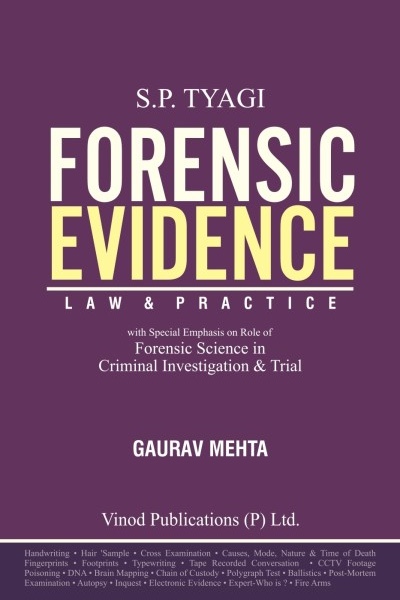
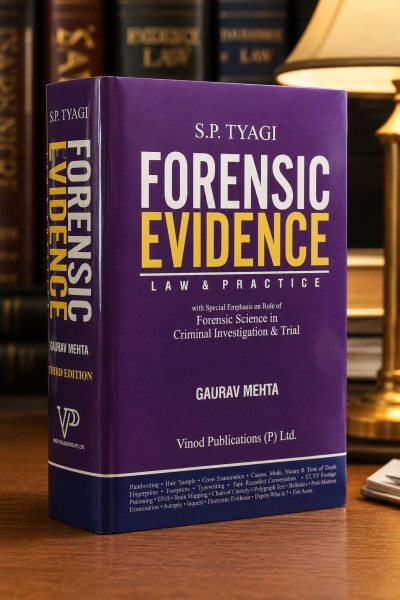
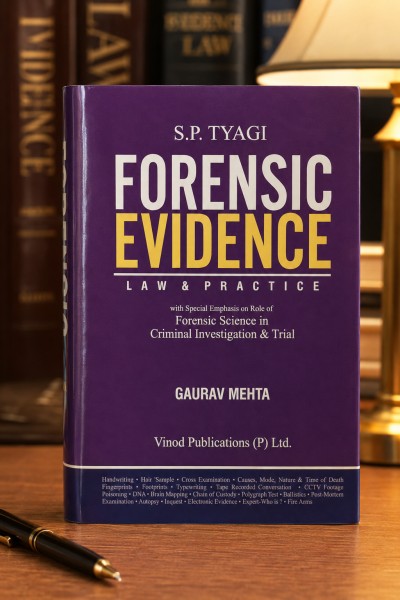
Forensic Evidence: Law and Practice is a comprehensive guide to the principles and practical application of forensic science in criminal investigation and trial. The book bridges the gap between legal procedures and scientific techniques by explaining how forensic evidence is collected, examined, interpreted, and presented before courts. Updated for the latest edition, it provides valuable insights into modern forensic practices, evidentiary requirements, and judicial perspectives, making it an essential reference for understanding the role of forensic science in the administration of criminal justice.
Key Features:
- Covers the role of forensic science from crime scene investigation to courtroom presentation of evidence.
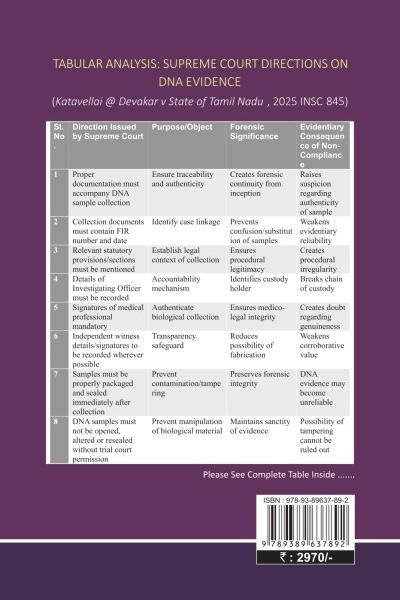
- Comprehensive discussion of DNA evidence, including collection, preservation, profiling, and Supreme Court directions relating to DNA evidence.
- Detailed coverage of handwriting and signature examination, disputed documents, forgery detection, and microscopic analysis.
- Explains forensic investigation of firearms, ammunition, ballistics, and weapon-related evidence.
- Includes scientific techniques relating to fingerprints, palm prints, footprints, footwear impressions, and other identification methods.
- Covers forensic biology, serology, toxicology, chemistry, and chemical analysis used in criminal investigations.
- Discusses medico-legal examination of bodily injuries, post-mortem findings, cause and time of death, burns, fractures, drowning, suffocation, and other forms of unnatural deaths.
- Examines forensic psychology and psychiatry, including insanity, intoxication, depression, epilepsy, and their evidentiary relevance.
- Provides detailed treatment of sexual offence investigations, including medical examination and collection of biological evidence.
- Covers specialised forensic disciplines such as cyber forensics, digital evidence, metadata, chain of custody, forensic linguistics, forensic odontology, bloodstain pattern analysis, brain mapping, narco-analysis, polygraph, and lie detection.
- Discusses child age determination, paternity, radiology, and other medico-legal identification techniques.
- Includes practical guidance on preservation, admissibility, appreciation, and evidentiary value of forensic evidence during investigation and trial.
This book is an invaluable resource for judges, advocates, public prosecutors, investigating officers, forensic science professionals, medical officers, law enforcement agencies, judicial officers, forensic laboratories, law teachers, researchers, and law students.


 Home > LAW BOOKS > Criminal Law > Evidence > 3rd Edition, 2026




 5
5