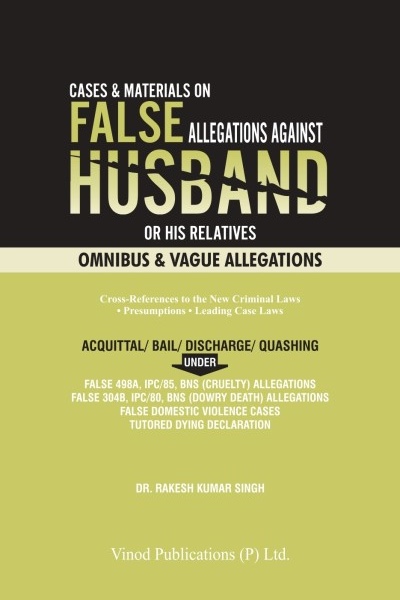
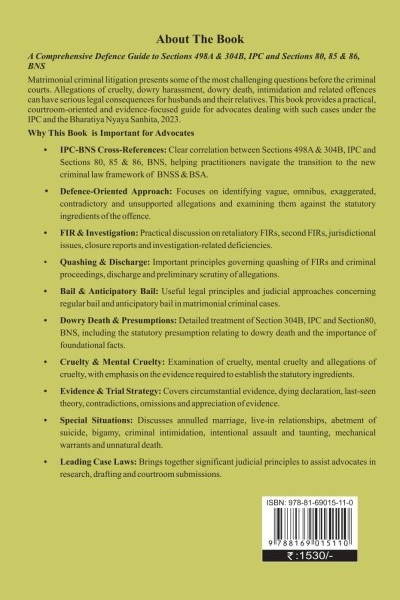
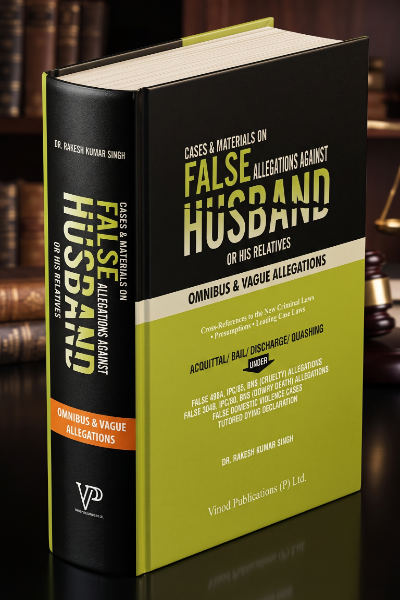
Matrimonial criminal litigation presents some of the most challenging questions before the criminal courts. Allegations of cruelty, dowry harassment, dowry death, intimidation and related offences can have serious legal consequences for husbands and their relatives. This book provides a practical, courtroom-oriented and evidence-focused guide for advocates dealing with such cases under the IPC and the Bharatiya Nyaya Sanita, 2023.
Key Features:
- IPC-BNS Cross-References: Clear correlation between Sections 498A & 304B, IPC and Sections 80, 85 & 86, BNS, helping practitioners navigate the transition to the new criminal law framework of BNSS & BSA.
- Defence-Oriented Approach: Focuses on identifying vague, omnibus, exaggerated, contradictory and unsupported allegations and examining them against the statutory ingredients of the offence.
- FIR & Investigation: Practical discussion on retaliatory FIRs, second FIRs, jurisdictional issues, closure reports and investigation-related deficiencies.
- Quashing & Discharge: Important principles governing quashing of FIRs and criminal proceedings, discharge and preliminary scrutiny of allegations.
- Bail & Anticipatory Bail: Useful legal principles and judicial approaches concerning regular bail and anticipatory bail in matrimonial criminal cases. Dowry Death & Presumptions: Detailed treatment of Section 304B, IPC and Section80, BNS, including the statutory presumption relating to dowry death and the importance of foundational facts.
- Cruelty & Mental Cruelty: Examination of cruelty, mental cruelty and allegations of cruelty, with emphasis on the evidence required to establish the statutory ingredients.
- Evidence & Trial Strategy: Covers circumstantial evidence, dying declaration, last-seen theory, contradictions, omissions and appreciation of evidence.
- Special Situations: Discusses annulled marriage, live-in relationships, abetment of suicide, bigamy, criminal intimidation, intentional assault and taunting, mechanical warrants and unnatural death. Leading Case Laws: Brings together significant judicial principles to assist advocates in research, drafting, and courtroom submissions.


 Home > LAW BOOKS > Family and Personal Laws > Marriage, Divorce, Maintenance and Separation > 1st Edition, 2027




 5