EBC Webstore
Eastern Book Company

|
|||
|
|||
 Home > 29 Nov 2011 Home > 29 Nov 2011 |



 5
5
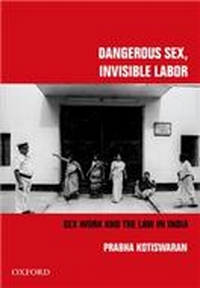
Popular representations of third-world sex workers as sex slaves and vectors of HIV have
spawned abolitionist legal reforms that are harmful and ineffective, and public health
initiatives that provide only marginal protection of sex workers rights. In this book, Prabha
Kotiswaran asks how we might understand sex workers demands that they be treated as
workers. She contemplates questions of redistribution through law within the sex industry by examining the political economies and legal ethnographies of two archetypical urban sex markets in India–Sonagachi in Kolkata and Tirupati in Andhra Pradesh.
Providing new insights into the lives of these women–many of whom are demanding the
respect and legal protection that other workers get–she builds a persuasive theoretical case for recognizing these womens sexual labor. Moving beyond standard feminist discourse on prostitution, Kotiswaran draws on a critical genealogy of materialist feminism for its sophisticated vocabulary of female reproductive and sexual labor, and uses a legal realist approach to show why criminalization cannot succeed amid the informal social networks and economic structures of sex markets. Based on this, she assesses the laws redistributive potential by
analysing the possible economic consequences of partial decriminalization, complete decriminalization, and legalization. Kotiswaran concludes with a theory of sex work from a postcolonial materialist feminist perspective.




|

Click on TITLE to choose available options.
|

|
Click on TITLE to choose available options.
|

|
Click on TITLE to choose available options.
|

|
Click on TITLE to choose available options.
|

|
Click on TITLE to choose available options.
|

|
Click on TITLE to choose available options.
|

|
|

|
Click on TITLE to choose available options.
|

|
Click on TITLE to choose available options.
|
|
|
|
||
|
||
|