


EBC Webstore
Eastern Book Company

|
|||
|
|||
 Home > LAW BOOKS > Practice and Procedure > Advocacy, Cross Examination & Ethics > 1st Edition 2023, Reprinted 2026 Home > LAW BOOKS > Practice and Procedure > Advocacy, Cross Examination & Ethics > 1st Edition 2023, Reprinted 2026 |




 5
5
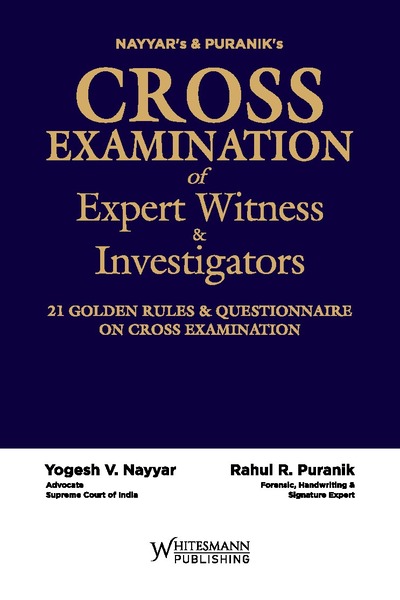
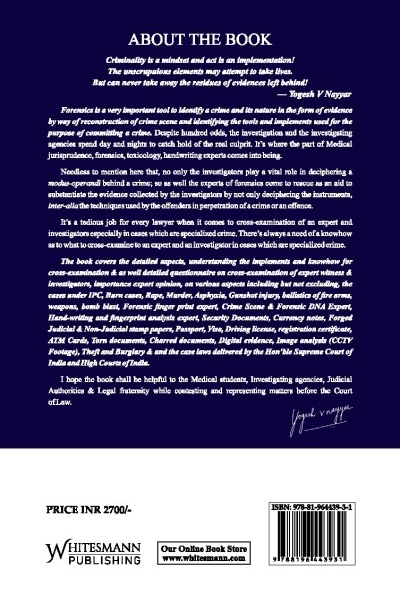
Cross Examination of Expert Witness and Investigators is a practical guide for legal professionals handling cases involving forensic and expert evidence. Authored by Yogesh V. Nayyar and Rahul R. Puranik, the book equips advocates with the knowledge and techniques required to effectively cross-examine expert witnesses and investigating officers in criminal trials. Covering a wide spectrum of forensic disciplines, medical jurisprudence, toxicology, digital evidence, ballistics, handwriting analysis, DNA profiling, fingerprint examination, and crime scene investigation, it combines legal principles with practical questionnaires and relevant judicial precedents. Designed to bridge the gap between forensic science and courtroom advocacy, this book serves as a valuable resource for building effective defence and prosecution strategies.
Key Features:
This book is an essential resource for advocates, criminal law practitioners, public prosecutors, judicial officers, investigating agencies, police officers, forensic experts, law students, medical jurisprudence students, and researchers.



|

Click on TITLE to choose available options.
|
|
Click on TITLE to choose available options.
|

|
Click on TITLE to choose available options.
|

|
Click on TITLE to choose available options.
|

|
Click on TITLE to choose available options.
|
|
Click on TITLE to choose available options.
|

|
|

|
Click on TITLE to choose available options.
|
|
Click on TITLE to choose available options.
|
|
|
|
||
|
||
|


