Want a Shipping Estimate? Add an Indian Pin Code, Click Here
This Product
Ships in 3-4 Weeks
Recommend
1
Share
4
Share
2
Share
5
Share
5
Send By e-mail
Verify Phone Number
Please enter the One Time Password (OTP) to verify phone number.
Write your own review
In just a few steps below you can become an online reviewer.
Please click on Continue to submit your review.
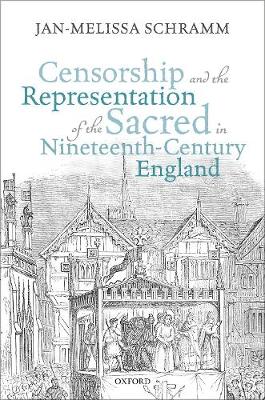
Title: Censorship and the Representation of the Sacred in Nineteenth-Century England
Reviewed By:
Write your review here:
NOTE:HTML is not translated!
Rating:
Share this product on email
Censorship and the Representation of the Sacred in Nineteenth-Century England
Product Details:
Format: Hardback
Publisher: Oxford University Press
Language: English
Dimensions: 24.00 X 2.00 X 16.00
Publisher Code: 9780198826064
Date Added: 2018-08-03
Search Category: International
Jurisdiction: International
Overview:
Throughout the nineteenth century, the performance of sacred drama on the English public stage was prohibited by law and custom left over from the Reformation: successive Examiners of Plays, under the control of the Lord Chamberlain's Office, censored and suppressed both devotional and blasphemous plays alike. Whilst the Biblical sublime found expression in the visual arts, the epic, and the oratorio, nineteenth-century spoken drama remained secular by force of
precedent and law. The maintenance of this ban was underpinned by Protestant anxieties about bodily performance, impersonation, and the power of the image that persisted long after the Reformation, and that were in fact bolstered by the return of Catholicism to public prominence after the passage of the
Catholic Relief Act in 1829 and the restoration of the Catholic Archbishoprics in 1850. But even as anti-Catholic prejudice at mid-century reached new heights, the turn towards medievalism in the visual arts, antiquarianism in literary history, and the 'popular' in constitutional reform placed England's pre- Reformation past at the centre of debates about the uses of the public stage and the functions of a truly national drama.
This book explores the recovery of the texts of the extant mystery-play cycles undertaken by antiquarians in the early nineteenth century and the eventual return of sacred drama to English public theatres at the start of the twentieth century. Consequently, law, literature, politics, and theatre history are brought into conversation with one another in order to illuminate the history of sacred drama and Protestant ant-theatricalism in England in the long nineteenth-century.