Want a Shipping Estimate? Add an Indian Pin Code, Click Here
This Product
Ships in 3-4 Weeks
Recommend
1
Share
4
Share
2
Share
5
Share
5
Send By e-mail
Verify Phone Number
Please enter the One Time Password (OTP) to verify phone number.
Write your own review
In just a few steps below you can become an online reviewer.
Please click on Continue to submit your review.
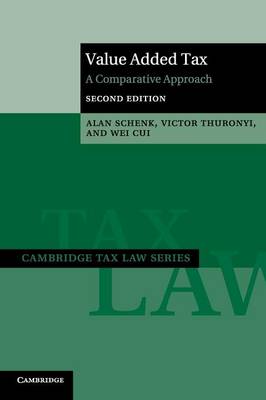
Title: Cambridge Tax Law Series: Value Added Tax: A Comparative Approach
Reviewed By:
Write your review here:
NOTE:HTML is not translated!
Rating:
Share this product on email
Cambridge Tax Law Series: Value Added Tax: A Comparative Approach
Product Details:
Format: Paperback / softback
Publisher: Cambridge University Press
Language: English
Dimensions: 23.00 X 3.00 X 15.00
Publisher Code: 9781107617629
Date Added: 2018-08-10
Search Category: International
Jurisdiction: International
Overview:
This book integrates legal, economic, and administrative materials about the value added tax (VAT) to present the only comparative approach to the study of VAT law. The comparative presentation of this volume offers an analysis of policy issues relating to tax structure and tax base as well as insights into how cases arising out of VAT disputes have been resolved. Its principal purpose is to provide comprehensive teaching tools - laws, cases, analytical exercises, and questions drawn from the experience of countries and organizations around the world. This second edition includes new VAT-related developments in Europe, Asia, Africa, and Australia and adds new chapters on VAT avoidance and evasion and on China's VAT. Designed to illustrate, analyze, and explain the principal theoretical and operating features of value added taxes, including their adoption and implementation, this book will be an invaluable resource for tax practitioners and government officials.
+ View More
Table Of Contents:
1. Introduction; 2. Forms of consumption-based taxes and altering the tax base; 3. Varieties of VAT in use; 4. Registration, taxpayer, and taxable business activity; 5. Taxable supplies of goods and services and tax invoices; 6. The tax credit mechanism; 7. Introduction to cross-border aspects of VAT; 8. Timing and valuation rules; 9. Zero rating and exemptions and government entities and nonprofit organizations; 10. VAT evasion and avoidance; 11. Gambling and financial services (other than insurance); 12. Insurance; 13. Real property; 14. An anatomy of China's VAT; 15. Interjurisdictional aspects of VAT in federal countries and common markets.