Want a Shipping Estimate? Add an Indian Pin Code, Click Here
This Product
Ships in 3-4 Weeks
Recommend
1
Share
4
Share
2
Share
5
Share
5
Send By e-mail
Verify Phone Number
Please enter the One Time Password (OTP) to verify phone number.
Write your own review
In just a few steps below you can become an online reviewer.
Please click on Continue to submit your review.
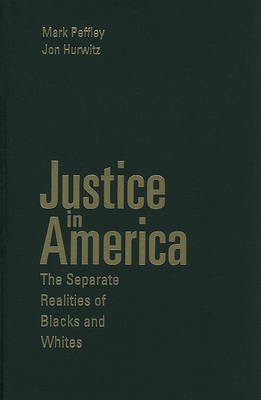
Title: Cambridge Studies in Public Opinion and Political Psychology: Justice in America: The Separate Realities of Blacks and Whites
Reviewed By:
Write your review here:
NOTE:HTML is not translated!
Rating:
Share this product on email
Cambridge Studies in Public Opinion and Political Psychology: Justice in America: The Separate Realities of Blacks and Whites
Product Details:
Format: Hardback
Publisher: Cambridge University Press
Language: English
Dimensions: 23.00 X 2.00 X 15.00
Publisher Code: 9780521119252
Date Added: 2018-08-09
Search Category: International
Jurisdiction: International
Overview:
As reactions to the O. J. Simpson verdict, the Rodney King beating, and the Amadou Diallo killing make clear, whites and African Americans in the United States inhabit two different perceptual worlds, with the former seeing the justice system as largely fair and color blind and the latter believing it to be replete with bias and discrimination. The authors tackle two important questions in this book: what explains the widely differing perceptions, and why do such differences matter? They attribute much of the racial chasm to the relatively common personal confrontations that many blacks have with law enforcement - confrontations seldom experienced by whites. More importantly, the authors demonstrate that this racial chasm is consequential: it leads African Americans to react much more cynically to incidents of police brutality and racial profiling, and also to be far more skeptical of punitive anti-crime policies ranging from the death penalty to three-strikes laws.
+ View More
Table Of Contents:
1. Introduction; 2. Racial bias in the justice system: reality and perception; 3. The role of fairness; 4. The consequences of fairness: polarized reactions to police brutality and racial profiling; 5. The consequences of fairness: support for punitive crime policies; 6. Conclusions; Appendix A. National survey and survey items; Appendix B. Examining reciprocal effects of unfair treatment and neighborhood discrimination.