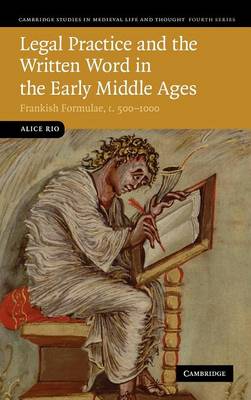
Cambridge Studies in Medieval Life and Thought: Fourth Series: Series Number 75: Legal Practice and the Written Word in the Early Middle Ages: Frankish Formulae, c.500-1000
Want a Shipping Estimate? Add an Indian Pin Code, Click Here
This Product
Ships in 3-4 Weeks
Recommend
1
Share
1
Share
1
Share
0
Share
1
Send By e-mail
Verify Phone Number
Please enter the One Time Password (OTP) to verify phone number.
Write your own review
In just a few steps below you can become an online reviewer.
Please click on Continue to submit your review.
Title: Cambridge Studies in Medieval Life and Thought: Fourth Series: Series Number 75: Legal Practice and the Written Word in the Early Middle Ages: Frankish Formulae, c.500-1000
Reviewed By:
Write your review here:
NOTE:HTML is not translated!
Rating:
Share this product on email
Cambridge Studies in Medieval Life and Thought: Fourth Series: Series Number 75: Legal Practice and the Written Word in the Early Middle Ages: Frankish Formulae, c.500-1000
Product Details:
Format: Hardback
Publisher: Cambridge University Press
Language: English
Dimensions: 23.00 X 2.00 X 15.00
Publisher Code: 9780521514996
Date Added: 2018-08-09
Search Category: International
Jurisdiction: International
Overview:
Legal formularies are books of model legal documents compiled by early medieval scribes for their own use and that of their pupils. A major source for the history of early medieval Europe, they document social relations beyond the narrow world of the political elite. Formularies offer much information regarding the lives of ordinary people: sales and gifts of land, divorces, adoptions, and disputes over labour as well as theft, rape or murder. Until now, the use of formularies as a historical source has been hampered by severe methodological problems, in particular through the difficulty of establishing a precise chronological or geographical context for them. By examining Frankish legal formularies from the Merovingian and Carolingian periods, this book provides an invaluable, detailed analysis of the problems and possibilities associated with formularies, and will be required reading for scholars of early medieval history.
+ View More
Table Of Contents:
Introduction; Part I. Formulae, Charters and the Written Word: 1. Orality and literacy in Frankish society; 2. An uneasy partnership? Formulae and charters; Part II. Inventory of the Evidence: 3. Defining the corpus; 4. Catalogue of collections; Part III. Formulae as a Historical Source: Limits and Possibilities: 5. Dating formulae; 6. Local context and diffusion; 7. From late antique notaries to ecclesiastical scribes: when, where and why formularies survive; 8. Formulae and written law; 9. A methodological test-case: slavery and unfreedom in the formularies; Conclusion; Appendix: a handlist of manuscripts.