Want a Shipping Estimate? Add an Indian Pin Code, Click Here
This Product
Ships in 3-4 Weeks
Recommend
1
Share
4
Share
2
Share
5
Share
5
Send By e-mail
Verify Phone Number
Please enter the One Time Password (OTP) to verify phone number.
Write your own review
In just a few steps below you can become an online reviewer.
Please click on Continue to submit your review.
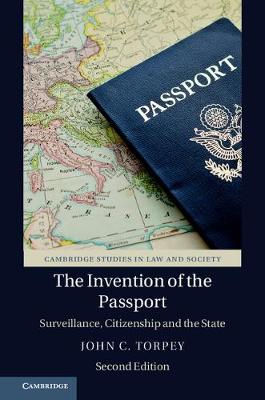
Title: Cambridge Studies in Law and Society: The Invention of the Passport: Surveillance, Citizenship and the State
Reviewed By:
Write your review here:
NOTE:HTML is not translated!
Rating:
Share this product on email
Cambridge Studies in Law and Society: The Invention of the Passport: Surveillance, Citizenship and the State
Product Details:
Format: Hardback
Publisher: Cambridge University Press
Language: English
Dimensions: 23.00 X 2.00 X 16.00
Publisher Code: 9781108473903
Date Added: 2018-08-10
Search Category: International
Jurisdiction: International
Overview:
This book presents the first detailed history of the modern passport and why it became so important for controlling movement in the modern world. It explores the history of passport laws, the parliamentary debates about those laws, and the social responses to their implementation. The author argues that modern nation-states and the international state system have 'monopolized the 'legitimate means of movement',' rendering persons dependent on states' authority to move about - especially, though not exclusively, across international boundaries. This new edition reviews other scholarship, much of which was stimulated by the first edition, addressing the place of identification documents in contemporary life. It also updates the story of passport regulations from the publication of the first edition, which appeared just before the terrorist attacks of 9/11, to the present day.
+ View More
Table Of Contents:
Preface to the second edition; Introduction; 1. Coming and going: on the state monopolization of the legitimate 'means of movement'; 2. 'Argus of the Patrie': the passport question in the French Revolution; 3. Sweeping out Augeas's stable: the nineteenth-century trend toward freedom of movement; 4. Toward the 'crustacean type of nation': the proliferation of identification documents from the late nineteenth century to the First World War; 5. From national to postnational? Passports and constraints on movement from the interwar to the postwar era; 6. 'Everything changed that day': passport regulations after the terrorist attacks of September 11, 2001; Conclusion: a typology of 'papers'; References; Index.