Want a Shipping Estimate? Add an Indian Pin Code, Click Here
This Product
Ships in 3-4 Weeks
Recommend
1
Share
4
Share
2
Share
5
Share
5
Send By e-mail
Verify Phone Number
Please enter the One Time Password (OTP) to verify phone number.
Write your own review
In just a few steps below you can become an online reviewer.
Please click on Continue to submit your review.
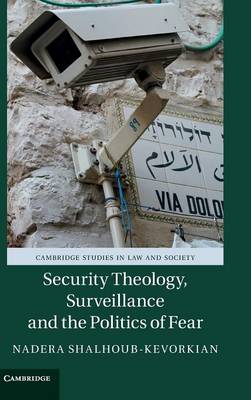
Title: Cambridge Studies in Law and Society: Security Theology, Surveillance and the Politics of Fear
Reviewed By:
Write your review here:
NOTE:HTML is not translated!
Rating:
Share this product on email
Cambridge Studies in Law and Society: Security Theology, Surveillance and the Politics of Fear
Product Details:
Format: Hardback
Publisher: Cambridge University Press
Language: English
Dimensions: 23.00 X 1.00 X 15.00
Publisher Code: 9781107097353
Date Added: 2018-08-05
Search Category: International
Jurisdiction: International
Overview:
This examination of Palestinian experiences of life and death within the context of Israeli settler colonialism broadens the analytical horizon to include those who 'keep on existing' and explores how Israeli theologies and ideologies of security, surveillance and fear can obscure violence and power dynamics while perpetuating existing power structures. Drawing from everyday aspects of Palestinian victimization, survival, life and death, and moving between the local and the global, Nadera Shalhoub-Kevorkian introduces and defines her notion of 'Israeli security theology' and the politics of fear within Palestine/Israel. She relies on a feminist analysis, invoking the intimate politics of the everyday and centering the Palestinian body, family life, memory and memorialization, birth and death as critical sites from which to examine the settler colonial state's machineries of surveillance which produce and maintain a political economy of fear that justifies colonial violence.
+ View More
Table Of Contents:
1. Introduction: settler colonialism, the politics of fear and the security theology; 2. Price tagging Palestinians: alternative methods of surveillance and control; 3. Israel in the bedroom: citizenship and entry law; 4. Hunted homeplaces; 5. Death and colonialism: the sacred and the profane; 6. Birth in Jerusalem; 7. Conclusion: newborns, new deaths and the 'gravediggers'.