Want a Shipping Estimate? Add an Indian Pin Code, Click Here
This Product
Ships in 3-4 Weeks
Recommend
1
Share
1
Share
1
Share
0
Share
1
Send By e-mail
Verify Phone Number
Please enter the One Time Password (OTP) to verify phone number.
Write your own review
In just a few steps below you can become an online reviewer.
Please click on Continue to submit your review.
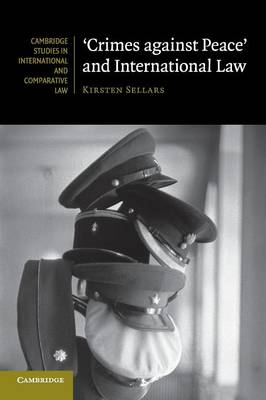
Title: Cambridge Studies in International and Comparative Law: Series Number 97: 'Crimes against Peace' and International Law
Reviewed By:
Write your review here:
NOTE:HTML is not translated!
Rating:
Share this product on email
Cambridge Studies in International and Comparative Law: Series Number 97: 'Crimes against Peace' and International Law
Product Details:
Format: Paperback / softback
Publisher: Cambridge University Press
Language: English
Dimensions: 23.00 X 2.00 X 15.00
Publisher Code: 9781107542532
Date Added: 2018-08-10
Search Category: International
Jurisdiction: International
Overview:
In 1946, the judges at the International Military Tribunal at Nuremberg declared 'crimes against peace' - the planning, initiation or waging of aggressive wars - to be 'the supreme international crime'. At the time, the prosecuting powers heralded the charge as being a legal milestone, but it later proved to be an anomaly arising from the unique circumstances of the post-war period. This study traces the idea of criminalising aggression, from its origins after the First World War, through its high-water mark at the post-war tribunals at Nuremberg and Tokyo, to its abandonment during the Cold War. Today, a similar charge - the 'crime of aggression' - is being mooted at the International Criminal Court, so the ideas and debates that shaped the original charge of 'crimes against peace' assume new significance and offer valuable insights to lawyers, policy-makers and scholars engaged in international law and international relations.
+ View More
Table Of Contents:
1. The emergence of the idea of aggression; 2. The quest for control; 3. The creation of a crime; 4. Innovation and orthodoxy at Nuremberg; 5. The Allies and an ad hoc charge; 6. The elimination of Japanese militarism; 7. Questions of self-defence; 8. Divisions on the bench at Tokyo; 9. The uncertain legacy of crimes against peace; Postscript.