Want a Shipping Estimate? Add an Indian Pin Code, Click Here
This Product
Ships in 3-4 Weeks
Recommend
1
Share
4
Share
2
Share
5
Share
5
Send By e-mail
Verify Phone Number
Please enter the One Time Password (OTP) to verify phone number.
Write your own review
In just a few steps below you can become an online reviewer.
Please click on Continue to submit your review.
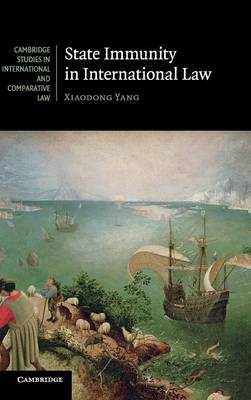
Title: Cambridge Studies in International and Comparative Law: Series Number 89: State Immunity in International Law
Reviewed By:
Write your review here:
NOTE:HTML is not translated!
Rating:
Share this product on email
Cambridge Studies in International and Comparative Law: Series Number 89: State Immunity in International Law
Product Details:
Format: Hardback
Publisher: Cambridge University Press
Language: English
Dimensions: 23.00 X 5.00 X 15.00
Publisher Code: 9780521844017
Date Added: 2018-08-10
Search Category: International
Jurisdiction: International
Overview:
The immunity or exemption enjoyed by States from legal proceedings before foreign national courts is a crucial area of international law. On the basis of an exhaustive analysis of judicial decisions, international treaties, national legislation, government statements, deliberations in international organisations as well as scholarly opinion, Xiaodong Yang traces the historical development of the relevant doctrine and practice, critically analyses the rationale for restrictive immunity and closely inspects such important exceptions to immunity as commercial transactions, contracts of employment, tortious liability, separate entities, the enforcement of judgments, waiver of immunity and the interplay between State immunity and human rights. The book draws a full picture of the law of State immunity as it currently stands and endeavours to provide useful information and guidance for practitioners, academics and students alike.
+ View More
Table Of Contents:
Introduction; 1. The history of state immunity; 2. General principles; 3. Commercial activity; 4. Contracts of employment; 5. Non-commercial torts; 6. Separate entities; 7. Expropriation; 8. Waiver of immunity; 9. Measures of constraint; 10. State immunity and human rights violations; 11. The genesis of the UN convention; General conclusions.