Want a Shipping Estimate? Add an Indian Pin Code, Click Here
This Product
Ships in 3-4 Weeks
Recommend
1
Share
4
Share
2
Share
5
Share
5
Send By e-mail
Verify Phone Number
Please enter the One Time Password (OTP) to verify phone number.
Write your own review
In just a few steps below you can become an online reviewer.
Please click on Continue to submit your review.
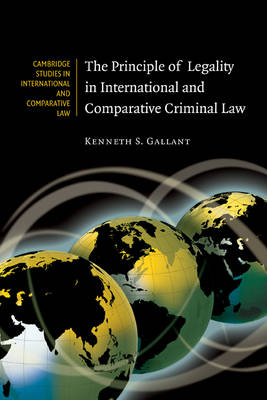
Title: Cambridge Studies in International and Comparative Law: Series Number 65: The Principle of Legality in International and Comparative Criminal Law
Reviewed By:
Write your review here:
NOTE:HTML is not translated!
Rating:
Share this product on email
Cambridge Studies in International and Comparative Law: Series Number 65: The Principle of Legality in International and Comparative Criminal Law
Product Details:
Format: Paperback / softback
Publisher: Cambridge University Press
Language: English
Dimensions: 23.00 X 3.00 X 15.00
Publisher Code: 9780521187602
Date Added: 2018-08-05
Search Category: International
Jurisdiction: International
Overview:
This book fills a major gap in the scholarly literature concerning international criminal law, comparative criminal law, and human rights law. The principle of legality (non-retroactivity of crimes and punishments and related doctrines) is fundamental to criminal law and human rights law. Yet this was the first book-length study of the status of legality in international law - in international criminal law, international human rights law, and international humanitarian law. This was also the first book to survey legality/non-retroactivity in all national constitutions, developing the patterns of implementation of legality in the various legal systems such as Common Law, Civil Law, Islamic Law, and Asian Law around the world. This is a necessary book for any scholar, practitioner, and library in the area of international, criminal, comparative, human rights, or international humanitarian law.
+ View More
Table Of Contents:
1. Legality in criminal law, its purposes, and its competitors; 2. A partial history to World War II; 3. Nuremberg, Tokyo, and other post-war cases; 4. Modern development of international human rights law: practice involving multilateral treaties and the universal declaration of human rights; 5. Modern comparative law development: national provisions concerning legality; 6. Legality in the modern international and internationalized criminal courts and tribunals; 7. Legality as a rule of customary international law today; Conclusion: the endurance of legality in national and international criminal law.