Want a Shipping Estimate? Add an Indian Pin Code, Click Here
This Product
Ships in 3-4 Weeks
Recommend
1
Share
4
Share
2
Share
5
Share
5
Send By e-mail
Verify Phone Number
Please enter the One Time Password (OTP) to verify phone number.
Write your own review
In just a few steps below you can become an online reviewer.
Please click on Continue to submit your review.
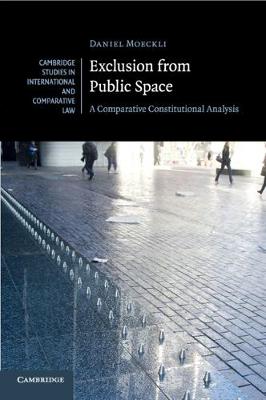
Title: Cambridge Studies in International and Comparative Law: Series Number 129: Exclusion from Public Space: A Comparative Constitutional Analysis
Reviewed By:
Write your review here:
NOTE:HTML is not translated!
Rating:
Share this product on email
Cambridge Studies in International and Comparative Law: Series Number 129: Exclusion from Public Space: A Comparative Constitutional Analysis
Product Details:
Format: Paperback / softback
Publisher: Cambridge University Press
Language: English
Dimensions: 0.00 X 0.79 X 0.00
Publisher Code: 9781316608296
Date Added: 2018-08-11
Search Category: International
Jurisdiction: International
Overview:
Hardly known twenty years ago, exclusion from public space has today become a standard tool of state intervention. Every year, tens of thousands of homeless individuals, drug addicts, teenagers, protesters and others are banned from parts of public space. The rise of exclusion measures is characteristic of two broader developments that have profoundly transformed public space in recent years: the privatisation of public space, and its increased control in the 'security society'. Despite the fundamental problems it raises, exclusion from public space has received hardly any attention from legal scholars. This book addresses this gap and comprehensively explores the implications that this new form of intervention has for the constitutional essentials of liberal democracy: the rule of law, fundamental rights, and democracy. To do so, it analyses legal developments in three liberal democracies that have been at the forefront of promoting exclusion measures: the United Kingdom, the United States, and Switzerland.
+ View More
Table Of Contents:
Summary contents; Contents; Abbreviations; 1. Introduction: 1.1 Exclusion from public space and its challenges to liberal democracy; 1.2 Methodology; 1.3 Scope of research; 1.4 Language and terminology; 1.5 Structure of the study; 2. Public Space and its Transformation: 2.1 The definition of 'public space' and related concepts; 2.2 Historical background; 2.3 The importance of public space; 2.4 Regulation of the use of public spac; 2.5 The transformation of public space; 2.6 Conclusion; 3. Exclusion from Public Space: 3.1 Historical background: the decline of banishment; 3.2 The resurgence of exclusion; 3.3 The targets of exclusio; 3.4 A typology of exclusion measures; 3.5 Conclusion; 4. Rule of Law: 4.1 The rule of law/Rechtsstaatsprinzip; 4.2 Principle of legality; 4.3 Requirement of sufficient precision; 4.4 Procedural safeguards and access to justice; 4.5 Conclusion; 5. Fundamental Rights: Liberty: 5.1 Fundamental and human rights; 5.2 Scope of protection; 5.3 Limitations; 5.4 Conclusion; 6. Fundamental Rights: Equality: 6.1 The right to equality and non-discrimination; 6.2 Exclusion from public space and the right to equality and non-discrimination; 6.3 Conclusion; 7. Democracy: 7.1 Democracy; 7.2 The democratic legitimacy of exclusion measures; 7.3 The consequences of exclusion measures for democracy; 7.4 Conclusion; 8. A Right (of Access) to Public Space?: 8.1 'Reclaiming public space'?; 8.2 De lege lata: is there a right to public space?; 8.3 De lege ferenda: is there a need for a right to public space?; 8.4 Conclusion; 9. Synthesis: 9.1 Conclusion: exclusion measures in conflict with liberal democracy; 9.2 Outlook: the importance of civic responsibility; Bibliography; Annex I. Overview of the most important exclusion norms; Annex II. Typology of exclusion norms.