Want a Shipping Estimate? Add an Indian Pin Code, Click Here
This Product
Ships in 3-4 Weeks
Recommend
1
Share
1
Share
1
Share
0
Share
1
Send By e-mail
Verify Phone Number
Please enter the One Time Password (OTP) to verify phone number.
Write your own review
In just a few steps below you can become an online reviewer.
Please click on Continue to submit your review.
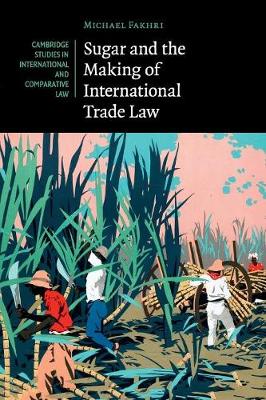
Title: Cambridge Studies in International and Comparative Law: Series Number 114: Sugar and the Making of International Trade Law
Reviewed By:
Write your review here:
NOTE:HTML is not translated!
Rating:
Share this product on email
Cambridge Studies in International and Comparative Law: Series Number 114: Sugar and the Making of International Trade Law
Product Details:
Format: Paperback / softback
Publisher: Cambridge University Press
Language: English
Dimensions: 23.00 X 1.00 X 15.00
Publisher Code: 9781316633472
Date Added: 2018-08-10
Search Category: International
Jurisdiction: International
Overview:
This book traces the changing meanings of free trade over the past century through three sugar treaties and their concomitant institutions. The 1902 Brussels Convention is an example of how free trade buttressed the British Empire. The 1937 International Sugar Agreement is a story of how a group of Cubans renegotiated their state's colonial relationship with the US through free trade doctrine and the League of Nations. In addition, the study of the 1977 International Sugar Agreement maps the world of international trade law through a plethora of institutions such as the ITO, UNCTAD, GATT and international commodity agreements - all against the backdrop of competing Third World agendas. Through a legal study of free trade ideas, interests and institutions, this book highlights how the line between the state and market, domestic and international, and public and private is always a matter of contest.
+ View More
Table Of Contents:
Part I. Prologue: 1. International institutions as part of the history of agriculture; 2. Histories as context; Part II. The 1902 Brussels Convention and the Beginnings of Modern Trade Law: 3. Free trade as an imperial project; 4. The institutionalization of international trade; Part III. The 1937 ISA, Cuba and the League of Nations: 5. Economic aspects of the League of Nations; 6. Developing a Cuban State and renegotiating American imperialism; Part IV. The 1977 ISA and the Implications of Institutionalization: 7. The postwar institutional landscape; 8. The 1977 ISA as an exemplar of postwar ICAs; Part V. Epilogue: 9. Using the past to open up the future of trade law.