Want a Shipping Estimate? Add an Indian Pin Code, Click Here
This Product
Ships in 3-4 Weeks
Recommend
1
Share
4
Share
2
Share
5
Share
5
Send By e-mail
Verify Phone Number
Please enter the One Time Password (OTP) to verify phone number.
Write your own review
In just a few steps below you can become an online reviewer.
Please click on Continue to submit your review.
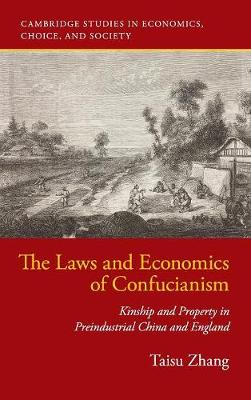
Title: Cambridge Studies in Economics, Choice, and Society: The Laws and Economics of Confucianism: Kinship and Property in Preindustrial China and England
Reviewed By:
Write your review here:
NOTE:HTML is not translated!
Rating:
Share this product on email
Cambridge Studies in Economics, Choice, and Society: The Laws and Economics of Confucianism: Kinship and Property in Preindustrial China and England
Product Details:
Format: Hardback
Publisher: Cambridge University Press
Language: English
Dimensions: 23.00 X 2.00 X 16.00
Publisher Code: 9781107141117
Date Added: 2018-08-10
Search Category: International
Jurisdiction: International
Overview:
Tying together cultural history, legal history, and institutional economics, The Laws and Economics of Confucianism: Kinship and Property in Preindustrial China and England offers a novel argument as to why Chinese and English preindustrial economic development went down different paths. The dominance of Neo-Confucian social hierarchies in Late Imperial and Republican China, under which advanced age and generational seniority were the primary determinants of sociopolitical status, allowed many poor but senior individuals to possess status and political authority highly disproportionate to their wealth. In comparison, landed wealth was a fairly strict prerequisite for high status and authority in the far more 'individualist' society of early modern England, essentially excluding low-income individuals from secular positions of prestige and leadership. Zhang argues that this social difference had major consequences for property institutions and agricultural production.
+ View More
Table Of Contents:
1. 'Dian' sales in Qing and Republican China; 2. Mortgages in early modern England; 3. Kinship, social hierarchy, and institutional divergence (theories); 4. Kinship, social hierarchy, and institutional divergence (empirics); 5. Kinship hierarchies in Late Imperial history; 6. Property institutions and agricultural capitalism; Conclusion; Index.