Want a Shipping Estimate? Add an Indian Pin Code, Click Here
This Product
Ships in 3-4 Weeks
Recommend
1
Share
4
Share
2
Share
5
Share
5
Send By e-mail
Verify Phone Number
Please enter the One Time Password (OTP) to verify phone number.
Write your own review
In just a few steps below you can become an online reviewer.
Please click on Continue to submit your review.
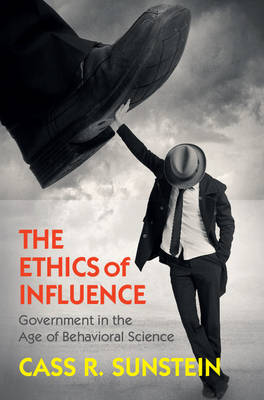
Title: Cambridge Studies in Economics, Choice, and Society: The Ethics of Influence: Government in the Age of Behavioral Science
Reviewed By:
Write your review here:
NOTE:HTML is not translated!
Rating:
Share this product on email
Cambridge Studies in Economics, Choice, and Society: The Ethics of Influence: Government in the Age of Behavioral Science
Product Details:
Format: Hardback
Publisher: Cambridge University Press
Language: English
Dimensions: 23.00 X 2.00 X 16.00
Publisher Code: 9781107140707
Date Added: 2018-08-05
Search Category: International
Jurisdiction: International
Overview:
In recent years, 'nudge units' or 'behavioral insights teams' have been created in the United States, the United Kingdom, Germany, and other nations. All over the world, public officials are using the behavioral sciences to protect the environment, promote employment and economic growth, reduce poverty, and increase national security. In this book, Cass R. Sunstein, the eminent legal scholar and best-selling co-author of Nudge (2008), breaks new ground with a deep yet highly readable investigation into the ethical issues surrounding nudges, choice architecture, and mandates, addressing such issues as welfare, autonomy, self-government, dignity, manipulation, and the constraints and responsibilities of an ethical state. Complementing the ethical discussion, The Ethics of Influence: Government in the Age of Behavioral Science contains a wealth of new data on people's attitudes towards a broad range of nudges, choice architecture, and mandates.
+ View More
Table Of Contents:
1. The age of behavioral science; 2. Choice and its architecture; 3. 'As judged by themselves'; 4. Values; 5. Fifty shades of manipulation; 6. Do people like nudges? Empirical findings; 7. Green by default? Ethical challenges for environmental protection; 8. Mandates - a very brief recapitulation; Appendix A. American attitudes toward thirty-four nudges; Appendix B. Survey questions; Appendix C. Executive Order 13707: using behavioral science insights to better serve the American people; Acknowledgements.