Want a Shipping Estimate? Add an Indian Pin Code, Click Here
This Product
Ships in 3-4 Weeks
Recommend
1
Share
4
Share
2
Share
5
Share
5
Send By e-mail
Verify Phone Number
Please enter the One Time Password (OTP) to verify phone number.
Write your own review
In just a few steps below you can become an online reviewer.
Please click on Continue to submit your review.
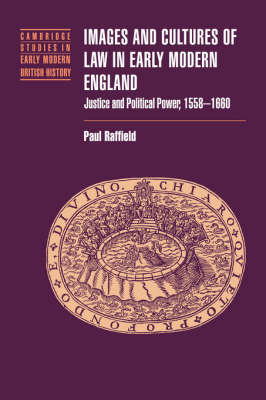
Title: Cambridge Studies in Early Modern British History: Images and Cultures of Law in Early Modern England: Justice and Political Power, 1558-1660
Reviewed By:
Write your review here:
NOTE:HTML is not translated!
Rating:
Share this product on email
Cambridge Studies in Early Modern British History: Images and Cultures of Law in Early Modern England: Justice and Political Power, 1558-1660
Product Details:
Format: Hardback
Publisher: Cambridge University Press
Language: English
Dimensions: 23.00 X 2.00 X 15.00
Publisher Code: 9780521827393
Date Added: 2018-08-06
Search Category: International
Jurisdiction: International
Overview:
This book offers an interesting interpretation of the hidden culture of the early modern legal profession and its influence on the development of the English constitution. It locates an alternative site of political sovereignty in the legal communities at the Inns of Court in London, examining the signs of legitimacy by which they sought to validate the claim that common law represented sovereign constitutional authority. The role of symbols in the culture of English law is central to the book's analysis. Within the framework of a cultural history of the legal profession from 1558 to 1660, the book considers the social presence of the law, revealed in its various signs. It analyses how institutional existence at the Inns of Court presented the legal community as an emblematic template for the English nation-state, defending the sovereignty of the Ancient Constitution by reference to the immemorial provenance of common law.
+ View More
Table Of Contents:
List of illustrations; Acknowledgements; Introduction; 1. Eating, learning and revering the law: oral traditions and the religious inheritance; 2. Architecture and heraldry: bodies of law, myth and honour; 3. Revels, feasting and role-playing: dreamland, drunkenness and the Utopian state; 4. The theatre of law: dramatic symbols of crown, common law and the Ancient Constitution; 5. Reformation, regulation and the image: the English state and the subject of law; 6. Common lawyers, fundamental law and the idolatrous mask of Charles I; 7. Interregnum: lex, ius and de facto government; Conclusion; Bibliography; Index.