Want a Shipping Estimate? Add an Indian Pin Code, Click Here
This Product
Ships in 3-4 Weeks
Recommend
1
Share
1
Share
1
Share
0
Share
1
Send By e-mail
Verify Phone Number
Please enter the One Time Password (OTP) to verify phone number.
Write your own review
In just a few steps below you can become an online reviewer.
Please click on Continue to submit your review.
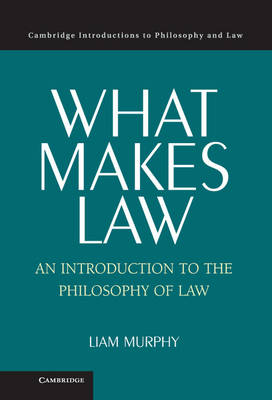
Title: Cambridge Introductions to Philosophy and Law: What Makes Law: An Introduction to the Philosophy of Law
Reviewed By:
Write your review here:
NOTE:HTML is not translated!
Rating:
Share this product on email
Cambridge Introductions to Philosophy and Law: What Makes Law: An Introduction to the Philosophy of Law
Product Details:
Format: Hardback
Publisher: Cambridge University Press
Language: English
Dimensions: 23.00 X 2.00 X 15.00
Publisher Code: 9780521834278
Date Added: 2018-08-06
Search Category: International
Jurisdiction: International
Overview:
This book offers an advanced introduction to central questions in legal philosophy. What factors determine the content of the law in force? What makes a normative system a legal system? How does law beyond the state differ from domestic law? What kind of moral force does law have? The most important existing views are introduced, but the aim is not to survey the existing literature. Rather, this book introduces the subject by stepping back from the fray to sketch the big picture, to show just what is at stake in these old debates. Legal philosophy has become somewhat arid and inward looking. In part this is because the disagreement between the main camps on the important questions is apparently intractable. The main aim of the book is to suggest both a diagnosis and a proper practical response to this situation of intractable disagreement about questions that do matter.
+ View More
Table Of Contents:
1. Introduction; 2. Morality and the grounds of law; 3. Legal positivism; 4. Nonpositivism; 5. Disagreement in practical philosophy; 6. Law; 7. The normative force of law; 8. What makes law law?: law beyond the state; 9. Conclusion: what matters?