Want a Shipping Estimate? Add an Indian Pin Code, Click Here
This Product
Ships in 3-4 Weeks
Recommend
1
Share
4
Share
2
Share
5
Share
5
Send By e-mail
Verify Phone Number
Please enter the One Time Password (OTP) to verify phone number.
Write your own review
In just a few steps below you can become an online reviewer.
Please click on Continue to submit your review.
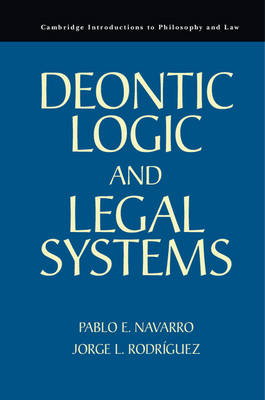
Title: Cambridge Introductions to Philosophy and Law: Deontic Logic and Legal Systems
Reviewed By:
Write your review here:
NOTE:HTML is not translated!
Rating:
Share this product on email
Cambridge Introductions to Philosophy and Law: Deontic Logic and Legal Systems
Product Details:
Format: Hardback
Publisher: Cambridge University Press
Language: English
Dimensions: 23.00 X 2.00 X 15.00
Publisher Code: 9780521767392
Date Added: 2018-08-05
Search Category: International
Jurisdiction: International
Overview:
A considerable number of books and papers have analyzed normative concepts using new techniques developed by logicians; however, few have bridged the gap between the English legal culture and the Continental (i.e. European and Latin American) tradition in legal philosophy. This book addresses this issue by offering an introductory study on the many possibilities that logical analysis offers the study of legal systems. The volume is divided into two sections: the first covers the basic aspects of classical and deontic logic and its connections, advancing an explanation of the most important topics of the discipline by comparing different systems of deontic logic and exploring some of the most important paradoxes in its domain. The second section deals with the role of logic in the analysis of legal systems by discussing in what sense deontic logic and the logic of norm-propositions are useful tools for a proper understanding of the systematic structure of law.
+ View More
Table Of Contents:
Part I. Introduction to Deontic Logic: 1. The language of logic and the possibility of deontic logic; 2. Paradoxes and shortcomings of deontic logic; 3. Norm-propositions, conditional norms, and defeasibility; Part II. Logic and Legal Systems: 4. Legal systems and legal validity; 5. Legal indeterminacy: normative gaps and conflicts of norms; 6. Legal dynamics.