Want a Shipping Estimate? Add an Indian Pin Code, Click Here
This Product
Ships in 3-4 Weeks
Recommend
1
Share
4
Share
2
Share
5
Share
5
Send By e-mail
Verify Phone Number
Please enter the One Time Password (OTP) to verify phone number.
Write your own review
In just a few steps below you can become an online reviewer.
Please click on Continue to submit your review.
Title: Cambridge Disability Law and Policy Series: Disability and Information Technology: A Comparative Study in Media Regulation
Reviewed By:
Write your review here:
NOTE:HTML is not translated!
Rating:
Share this product on email
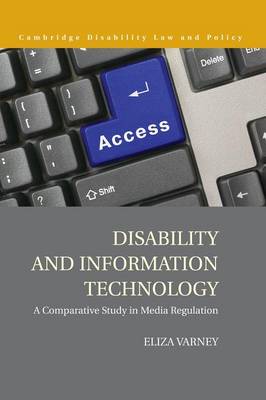
Cambridge Disability Law and Policy Series: Disability and Information Technology: A Comparative Study in Media Regulation
Product Details:
Format: Paperback / softback
Publisher: Cambridge University Press
Language: English
Dimensions: 23.00 X 2.00 X 15.00
Publisher Code: 9781107502895
Date Added: 2018-08-05
Search Category: International
Jurisdiction: International
Overview:
Disability and Information Technology examines the extent to which regulatory frameworks for information and communication technologies (ICTs) safeguard the rights of persons with disabilities as citizenship rights. It adopts a comparative approach focused on four case studies: Canada, the European Union, the United Kingdom and the United States. It focuses on the tension between social and economic values in the regulation of ICTs and calls for a regulatory approach based on a framework of principles that reflects citizenship values. The analysis identifies challenges encountered in the jurisdictions examined and points toward the rights-based approach advanced by the UN Convention on the Rights of Persons with Disabilities as a benchmark in protecting the rights of persons with disabilities to have equal access to information. The research draws on a wealth of resources, including legislation, cases, interviews, consultation documents and responses from organisations representing persons with disabilities.
+ View More
Table Of Contents:
1. The regulation of ICTs for the pursuit of citizenship rights; 2. Case study: Canada; 3. Case study: the European Union; 4. Case study: the United Kingdom; 5. Case study: the United States of America; 6. Lessons to be learnt? Reflection on the case studies.