Want a Shipping Estimate? Add an Indian Pin Code, Click Here
This Product
Ships in 3-4 Weeks
Recommend
1
Share
4
Share
2
Share
5
Share
5
Send By e-mail
Verify Phone Number
Please enter the One Time Password (OTP) to verify phone number.
Write your own review
In just a few steps below you can become an online reviewer.
Please click on Continue to submit your review.
Title: Cambridge Bioethics and Law: Series Number 36: The Global Health Crisis: Ethical Responsibilities
Reviewed By:
Write your review here:
NOTE:HTML is not translated!
Rating:
Share this product on email
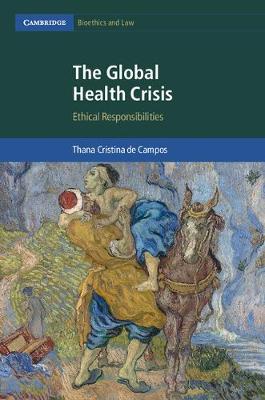
Cambridge Bioethics and Law: Series Number 36: The Global Health Crisis: Ethical Responsibilities
Product Details:
Format: Hardback
Publisher: Cambridge University Press
Language: English
Dimensions: 23.00 X 2.00 X 16.00
Publisher Code: 9781107190351
Date Added: 2018-08-05
Search Category: International
Jurisdiction: International
Overview:
Proposing a new view of global justice based on natural law, this book presents a discussion of the key ethical values in contemporary medicine and health, notably in relation to neglected diseases like malaria, Ebola and Zika. The lack of treatments for such diseases points to a global health crisis. Thana Cristina de Campos provides a general framework, based on global commutative justice, for discussion of the ethical responsibilities of international stakeholders, mapping the varying duties they have, and their content and force. She also addresses the urgent need for reforms to the international legal rules on bioethics, notably the system of intellectual property rights. These ideas will be of interest to those who are looking for a more nuanced view of the human right to health than that provided by advocates in the globalist mainstream.
+ View More
Table Of Contents:
Introduction; Part I. Defining the Object: What Is a Reasonable Scope and Content for the Human Right to Health?: 1. The moral value of health: health as a basic human need; 2. The human right to health and its corresponding responsibilities; Part II. Defining the Subjects: Who Are the Duty-Bearers of the Right to Health?: 3. States and natural persons as subjects of justice; 4. Pharmaceutical transnational corporations as subjects of justice; Part III. Defining Just Institutions: How Should Right to Health Responsibilities Be Allocated among the Subjects of Justice?: 5. The global health governance of the global health crisis; Conclusion.