EBC Webstore
Eastern Book Company

|
|||
|
|||

 Home > LAW BOOKS > Business Law > Transport Law > Aviation and Space Law Home > LAW BOOKS > Business Law > Transport Law > Aviation and Space Law |



 5
5
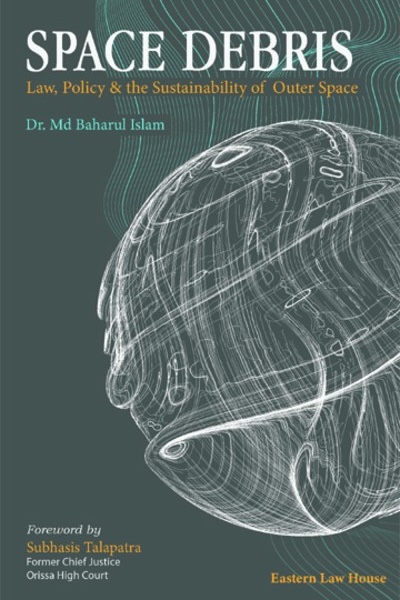
Outer space has become an indispensable domain for scientific advancement, communication, navigation, security, and economic development. However, the rapid growth of space activities has also led to the accumulation of a vast amount of space debris, posing serious risks to operational spacecraft, astronauts, and the long-term sustainability of the orbital environment. The increasing congestion of Earth’s orbits has transformed space debris from a technical concern into a significant legal, environmental, and governance challenge requiring urgent international attention.
This book provides a comprehensive examination of the evolving problem of space debris from interdisciplinary perspectives, with particular emphasis on international space law, space policy and sustainable space governance. It explores the historical development of the debris problem, analyses its environmental and security implications, and evaluates the adequacy of existing international legal and policy frameworks governing outer space activities. The work critically examines key treaties, conventions, guidelines, and emerging regulatory mechanisms while identifying the legal and policy gaps that continue to hinder effective debris management. Special attention has been given to the role of major spacefaring nations, international organizations, and India’s evolving position in the global space governance framework.
Recognizing that legal solutions alone are insufficient, the book also explores technological innovations, sustainability principles, ethical considerations, and future governance models necessary for preserving outer space as a safe and accessible domain. It examines emerging technologies, international cooperation mechanisms, commercial space activities, and the responsibilities of states and private actors in ensuring the sustainable use of outer space.
By integrating legal analysis with policy considerations, technological developments, environmental concerns, ethical perspectives, and governance frameworks, this book contributes to the growing discourse on the sustainability of outer space activities. It demonstrates that addressing the challenge of space debris requires not only robust legal regulation but also effective policy measures, international cooperation, and innovative technological solutions. The book serves as a valuable resource for academics, researchers, policymakers, legal practitioners, students, and professionals seeking to understand the complex challenges posed by space debris and the pathways toward ensuring the long-term sustainability of outer space for present and future generations.

|

Click on TITLE to choose available options.
|
|
Click on TITLE to choose available options.
|

|
Click on TITLE to choose available options.
|

|

Click on TITLE to choose available options.
|

|
Click on TITLE to choose available options.
|
|
Click on TITLE to choose available options.
|

|
|

|
Click on TITLE to choose available options.
|
|
Click on TITLE to choose available options.
|
|
||
|
||
|