EBC Webstore
Eastern Book Company

|
|||
|
|||

 Home Home |



 5
5
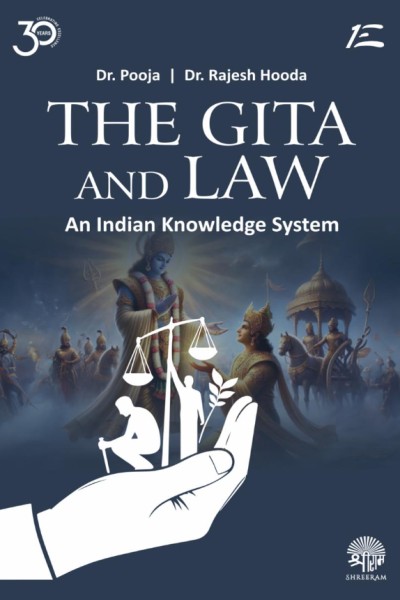
The Gita and Law: An Indian Knowledge System by Dr. Pooja and Dr. Rajesh Hooda presents a unique interdisciplinary study exploring the relationship between the timeless teachings of the Bhagavad Gita and the principles of law, justice, ethics, governance, and human conduct. The book examines how the philosophical foundations of the Gita continue to influence contemporary legal thought and contribute to the development of an indigenous Indian jurisprudential framework.
Drawing upon the rich wisdom of the Bhagavad Gita, the authors analyze concepts such as Dharma, duty, justice, righteousness, accountability, leadership, ethical decision-making, and social responsibility. The work highlights the relevance of ancient Indian knowledge systems in understanding modern legal challenges and strengthening value-based approaches to legal education and judicial reasoning.
The book explores the role of law as an instrument of social order and compares legal obligations with the moral and ethical duties discussed in the Gita. It further examines the relationship between individual rights and responsibilities, principles of governance, conflict resolution, public welfare, and the pursuit of justice through a philosophical lens rooted in Indian tradition.


|

Click on TITLE to choose available options.
|

|
Click on TITLE to choose available options.
|

|
Click on TITLE to choose available options.
|

|
Click on TITLE to choose available options.
|

|
Click on TITLE to choose available options.
|

|
Click on TITLE to choose available options.
|

|
|

|
Click on TITLE to choose available options.
|

|
Click on TITLE to choose available options.
|
|
|
|
||
|
||
|