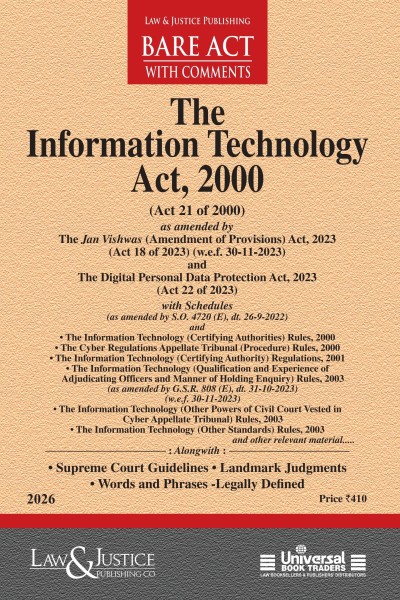
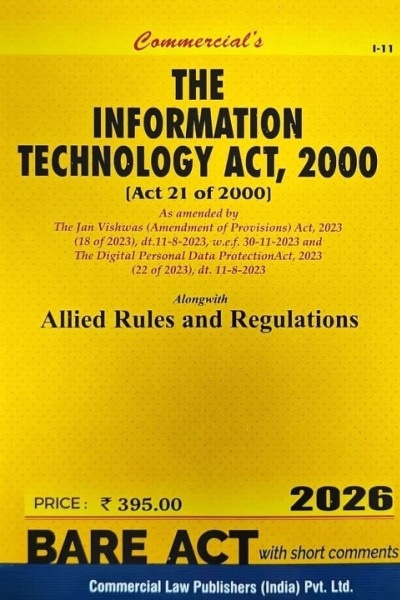
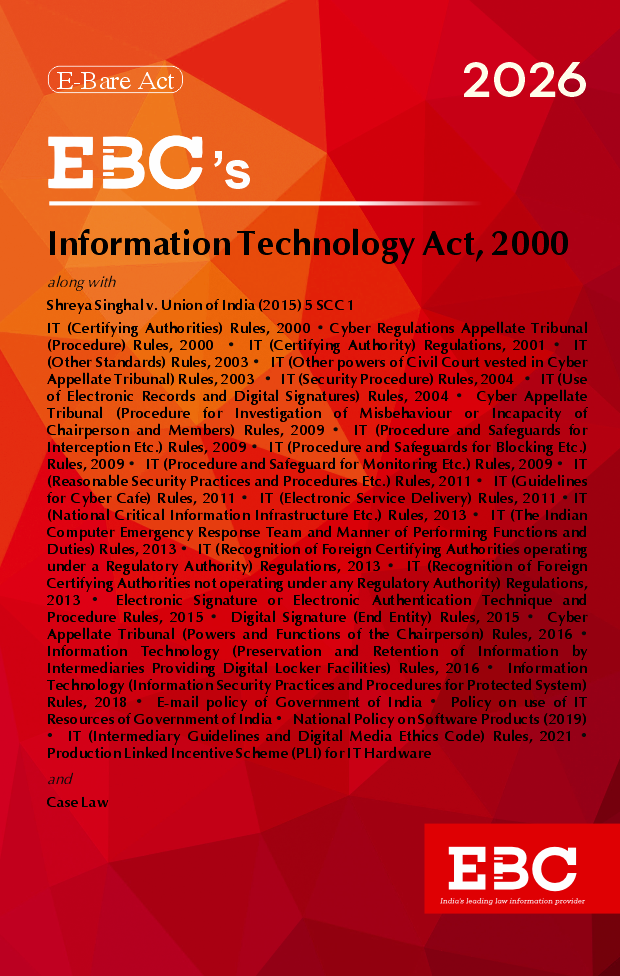
This 2025 Bare Act edition of the Information Technology Act, 2000 (Act 21 of 2000), amended up to the Jan Vishwas (Amendment of Provisions) Act, 2023, and the Digital Personal Data Protection Act, 2023, is a comprehensive statutory reference that encapsulates India's full cyber-law and digital governance framework. The volume integrates the principal Act along with all relevant rules, notifications, and regulatory instruments, making it an indispensable resource for legal, compliance, cybersecurity, and technology professionals.
Key Features:
- Complete and updated text of the Information Technology Act, 2000, with amendments incorporated through the DPDP Act 2023.
- 21 essential allied rules and regulations, including:
- IT (Intermediary Guidelines & Digital Media Ethics Code) Rules, 2021?2024
- CERT-In Directions 2022
- Sensitive Personal Data or Information (SPDI) Rules, 2011
- Cyber-Appellate Tribunal and Adjudication Rules
- CERT Fee Rules, Aadhaar-eSign, and digital-signature related regulations
- Coverage of core cyber-law themes: electronic records & contracts, digital signatures, intermediary liability, cyber-offences (hacking, cyber-terrorism, child pornography), algorithmic safe harbours, and penalty/adjudication mechanisms.
- Amendments flagged showing new consent, breach reporting, and cross-border data transfer linkages under the DPDP law.
- Practical usability enhancements: side-margin notes, practice pointers on blocking orders, decryption directions, search & seizure under digital evidence, and complaint-filing steps.
- Digital access support with a QR-linked index for the latest MeitY notifications and updates.
- Durable sewn binding, Compact techno-yellow design, ideal for continuous desk and field reference.
This volume is ideal for in-house counsels and compliance teams drafting data-transfer contracts, terms of service, and privacy frameworks. It supports cybercrime units and enforcement agencies in aligning IT Act offences with provisions of the IPC, CrPC, and Evidence Act. Judges and adjudicating authorities rely on it during blocking, intermediary liability, and digital evidence hearings. It is also highly useful for law students, academics, and researchers studying India?s evolving technology-law and digital-rights landscape.


 Home > BARE ACTS > Business Law > Information Technology > 2026


 3
3