EBC Webstore
Eastern Book Company

|
|||
|
|||

 Home Home |



 5
5
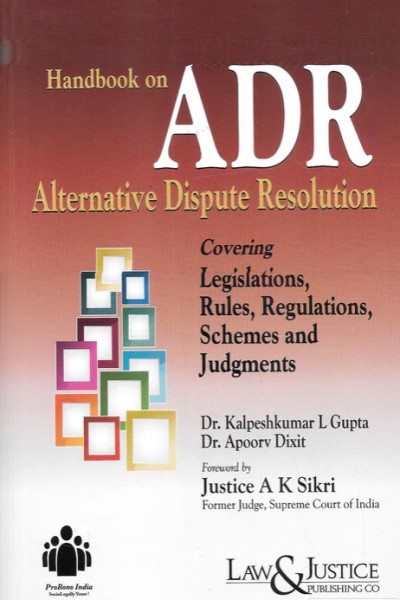
This handbook provides a comprehensive and structured understanding of Alternative Dispute Resolution mechanisms in India, examining arbitration, mediation, conciliation, and other non-adversarial processes. It integrates statutory provisions with judicial interpretations, regulatory frameworks, and institutional mechanisms governing ADR. The book explains how ADR has evolved as an effective tool for dispute resolution, emphasizing efficiency, accessibility, and justice-oriented outcomes.
Key Features
This book is particularly useful for advocates and arbitrators handling ADR proceedings, judges and judicial officers promoting alternative dispute resolution, law students studying arbitration and mediation, academicians researching dispute resolution systems, corporate professionals involved in dispute management, and candidates preparing for judicial services and competitive law examinations.



|

Click on TITLE to choose available options.
|
|
Click on TITLE to choose available options.
|

|
Click on TITLE to choose available options.
|

|
Click on TITLE to choose available options.
|

|
Click on TITLE to choose available options.
|
|
Click on TITLE to choose available options.
|

|
|

|
Click on TITLE to choose available options.
|

|
Click on TITLE to choose available options.
|
|
|
|
||
|
||
|