


EBC Webstore
Eastern Book Company

|
|||
|
|||

 Home > GLOBAL > Crime and criminology > Criminal investigation & detection > Forensic science Home > GLOBAL > Crime and criminology > Criminal investigation & detection > Forensic science |


.jpg)


 5
5
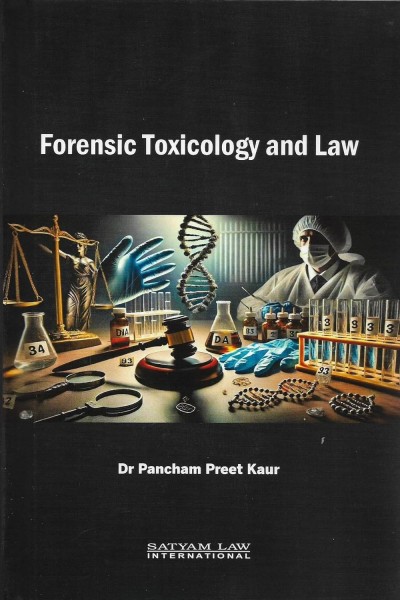
Forensic Toxicology and Law presents a comprehensive and methodical exploration of how toxicology interfaces with legal systems, criminal investigations, and regulatory frameworks. Moving from foundational scientific principles to complex legal doctrines, the book offers a panoramic view of how poisons, drugs, and chemical substances are identified, analysed, interpreted, and used as evidence within judicial processes. It traces the historical evolution of toxicology, examines global and national legal standards, and highlights the expanding role of forensic science in modern justice delivery. Rich with institutional insights, international conventions, and practical challenges, this work stands as both an academic resource and a practical reference for professionals navigating the intersection of science and law.
Key Features
This book is ideal for students, legal practitioners, forensic scientists, criminologists, researchers, and policymakers who seek a deeper understanding of how scientific toxicology operates within legal systems.
CHAPTER 1 – Introduction
1.1 Meaning and Scope of Toxicology – p.3
1.2 Concept of Forensic Toxicology – p.6
1.3 Role of Forensic Toxicology in the Criminal Justice System – p.11
1.4 Laws Relating to Forensic Toxicology in India – p.13
1.5 Concept of Drugs – p.14
• 1.5.1 Depressants – p.15
• 1.5.2 Stimulants – p.17
• 1.5.3 Hallucinogens – p.18
• 1.5.4 Pharmaceutical Materials – p.19
1.6 Concept of Poisons – p.21
• 1.6.1 Based on Mode of Action – p.22
• 1.6.2 Based on Physical Nature – p.25
CHAPTER 2 – Historical Evolution of Forensic Toxicology
2.1 History of Toxicology – p.28
2.2 Toxicology in the Ancient World – p.30
• 2.2.1 Primitive Period – p.30
• 2.2.2 Age of Arsenic – p.32
• 2.2.3 Middle Ages and Renaissance – p.33
2.2.4 Modern Era – p.35
2.3 Toxicology in Ancient India – p.36
• 2.3.1 Pre-Independence Period – p.38
• 2.3.2 Post-Independence Period – p.43
• 2.3.3 Development & Application in Modern India – p.45
CHAPTER 3 – International Perspective
3.1 International Institutions – p.49
• American Academy of Forensic Sciences (1948) – p.50
• International Association of Forensic Toxicologists (1963) – p.51
• Society of Forensic Toxicologists (1970) – p.51
• American Board of Forensic Toxicology (1975) – p.52
• Forensic Toxicology Council (2009) – p.53
• Scientific Working Group for Forensic Toxicology (2009) – p.53
3.2 UN Bodies Linked to Drug Control Conventions – p.54
• ECOSOC (1945) – p.54
• Commission on Narcotic Drugs (1946) – p.56
• WHO (1948) – p.57
• INCB (1968) – p.58
• UNGASS (1988) – p.59
3.3 Regional Convention – SAARC Convention – p.63
3.4 Guidelines for Poison Control (UNEP) – p.64
CHAPTER 4 – Progression of the International Drug Control System
4.1 Pre-Control Drug Situation – p.72
4.2 Emergence of International Drug Control Consensus – p.74
4.3 Development of Legal Framework – p.76
• 1909 Shanghai Conference – p.76
• 1912 Hague Opium Convention – p.77
• League of Nations (1920–45) – p.78
• 1925 Geneva Opium Convention – p.78
• 1931 Geneva Narcotics Convention – p.80
• 1936 Trafficking Convention – p.81
• UN Drug Control – p.82
• 1946 Lake Success Protocol – p.82
• 1948 Paris Protocol – p.83
CHAPTER 5 – The Conventions on Drug Control
5.1 Single Convention on Narcotic Drugs, 1961 – p.88
5.2 Psychotropic Substances Convention, 1971 – p.102
5.3 Convention Against Illicit Traffic in Narcotic Drugs & Psychotropic Substances, 1988 – p.108
CHAPTER 6 – Application of Forensic Toxicology – p.114
6.1 Disciplines of Forensic Toxicology – p.115
• Post-Mortem Toxicology – p.115
• Human Performance Toxicology – p.120
• Doping Control – p.123
• Workplace Drug Testing – p.125
6.2 Samples Used in Investigations – p.127
• Blood – p.130
• Hair – p.133
• Oral Fluid – p.133
• Vitreous Humor – p.134
• Tissues – p.135
• Gastric Contents – p.136
• Nails – p.136
• Bone & Bone Marrow – p.137
• DNA – p.137
• Stomach Contents – p.138
• Liver – p.138
• Kidney – p.139
• Lung Contents – p.139
• Bile – p.139
• Adipose Tissue – p.140
6.3 Analytical Methods – p.140
• Qualitative Assays – p.140
• Quantitative Assays – p.141
6.4 Procedure for Analysis – p.144
CHAPTER 7 – Legal Framework of Forensic Toxicology in India – p.147
7.1 Laws Relating to Forensic Toxicology – p.149
• Bharatiya Nyaya Sanhita, 2023 – p.151
• Bharatiya Nagarik Suraksha Sanhita, 2023 – p.156
• Bharatiya Sakshya Adhiniyam, 2023 – p.162
• Constitution of India, 1950 – p.163
• Drugs & Cosmetics Act, 1940 – p.164
• Drugs & Cosmetics Rules, 1945 – p.166
• Pharmacy Act, 1948 – p.167
• Drug Control Act, 1950 – p.167
• Drugs & Magic Remedies Act, 1954 – p.167
• NDPS Act, 1985 – p.168
• Drugs Price Control Order, 1995 – p.169
• Criminal Procedure (Identification) Act, 2022 – p.169
7.2 Policies & Deliberations – p.170
• Malimath Committee (2003) – p.170
• National Draft Policy on Criminal Justice Reforms (2007) – p.171
• Forensic Regulatory & Development Authority of India Bill (2011) – p.172
CHAPTER 8 – Relevance and Admissibility of Forensic Evidence – p.173
8.1 Probative Value of Scientific Evidence – p.174
8.2 Corroboration Requirement – p.177
8.3 Problems in Admissibility – p.179
• Legal problems – p.179
• Problems with Techniques – p.180
• Problems in Investigation – p.180
• Laboratory Issues – p.181
8.4 Suggestions – p.181
CHAPTER 9 – Judicial Perspective – p.184
9.1 Role of Indian Judiciary – p.185
9.2 Restrictive Use of Forensic Evidence – p.197
9.3 Constraints Faced by Allied Subsidiaries – p.198
Bibliography – p.203

|

Click on TITLE to choose available options.
|
|
Click on TITLE to choose available options.
|
![The Practical Lawyer - PLW [Annual Subscription]](https://s3.amazonaws.com/ebcwebstore/images/the-practical-lawyer-magazine-annual-subscription.png)
|
Click on TITLE to choose available options.
|

|

Click on TITLE to choose available options.
|

|
Click on TITLE to choose available options.
|

|
Click on TITLE to choose available options.
|

|
|

|
Click on TITLE to choose available options.
|

|
Click on TITLE to choose available options.
|
|
|
|
||
|
||
|


